-
Blake.Chu sales consultant
-
Email: 113217160@qq.com
-
Phone/WeChat +86 19129108136

Diamond Saw Blade :Review & Comparison
1.Preface
Diamond saw blades are key cutting tools for concrete, tile and stone work. This guide compares and tests diamond saw blades to help you pick the right one. It covers diamond cutting discs for ceramic tiles, tile cutting discs for angle grinders, 14‑inch diamond saw blades for concrete and more. We compare high‑end and budget saw blades on bond matrix technology, segment structure and service life. We also analyze the total usage cost under different working conditions to support your choice.
2.Main Advantages of High‑End Diamond Saw Blades
2.1 High‑quality diamond raw materials
We use high‑grade industrial single‑crystal diamond. These regular crystals have good impact toughness and wear resistance. They cut hard materials such as granite, high‑strength concrete and full‑body vitrified tiles steadily. They resist cutting impact and reduce diamond grain breakage.
2.2 Advanced metal bond technology
We use specially mixed metal binders and hot-press sintering. The bond matrix holds diamond grains firmly. It stops grains from falling off and slows down dulling, so the cutting edge stays sharp.
2.3 Optimized saw blade structure
The blade base has noise reduction and shock absorption. Special chip grooves help remove stone powder and reduce heat build-up. It works with bridge saws, angle grinders and large road cutters.
2.4Long service life
It delivers much longer cutting length per blade. The cutting cost per meter is lower. It fits continuous heavy professional work. You change blades less often and work faster.

3.Users for High‑End Diamond Saw Blades
These blades serve professional users who need good cutting quality and stable continuous work. They include stone factories, fine finishing teams and civil engineering contractors. They cut hard and abrasive materials such as full‑body tiles, granite, thick concrete and reinforced concrete. They handle mass cutting and fine edge trimming. These users care about low reject rates and low cutting cost per meter.
4.Full Introduction of Budget Diamond Saw Blades
4.1 Low purchase cost
Budget diamond saw blades adopt simple mass production and common raw materials. They skip expensive modified mixes and precision processing. The upfront cost is low. They fit small businesses and casual workers for bulk buying and basic use.
4.2 Fits Light Cutting Work
This blade works for soft building materials under light load. It cuts common red bricks, lightweight blocks, normal concrete, thin tiles and plasterboard. It makes clean cuts for home renovation and small construction. It cannot cut hard stone or handle heavy continuous work.
4.3 Basic bond technology
It uses standard powder metallurgy to embed diamond grains in the metal matrix. Sizes fit most common cutting machines. It only meets basic cutting standards. It has no advanced upgrades such as modified bond matrix or multi‑layer diamond grains. It is designed for simple, light jobs.
4.4 Shorter service life
It uses basic diamond concentration. The bond matrix has low wear resistance and weak grain retention. Under frequent heavy work, diamond grains get dull or fall off quickly. The blade wears fast and needs replacement often. It only works for occasional, light cutting tasks.
In short, budget diamond saw blades are low‑cost basic cutting tools. They work well for simple home jobs. They are not for heavy engineering work or hard stone cutting.
5.Users for Budget Diamond Saw Blades
Budget diamond saw blades have low prices and wide compatibility. They suit users with low‑frequency, light and low‑cost cutting needs.
5.1 Home DIY lovers
They do home updates and small material cutting. They cut grooves into tiles and red bricks in small jobs. These blades fit common hand‑held cutters. They do not need expensive industrial tools for simple home projects.
5.2 Casual individual workers
Repair workers and part‑time builders do small, separate jobs without heavy continuous cutting. One blade handles concrete, brick and thin tile. Workers do not need many different blades and save tool costs.
5.3 Users with short, low‑frequency work
For partial building repair and project finishing, workers do not need high wear resistance. Budget blades meet basic cutting needs without extra performance waste.
5.4 Small short‑term projects with limited budget
Small construction or simple renovation projects have short time limits and tight budgets. Budget blades meet standard cutting requirements and control the total cost of consumables.
6.Full Comparison: High‑End VS Budget Diamond Saw Blades
We compare the two types in seven areas: raw material and technology, cutting precision, service life, suitable materials, working speed, supported machines and total usage cost. This helps you choose correctly.
| Comparison Item | Budget Diamond Saw Blades | High‑End Diamond Saw Blades |
| Raw material and technology | Use simple alloy bond matrix and standard diamond grains made by basic powder metallurgy. They have no strengthened structure. | Use high‑purity alloy and top‑grade man‑made diamond. They use vacuum brazing, laser welding, dense bond matrix and oriented diamond grains. They have stronger grain retention, better heat resistance and a more stable structure. |
| Cutting precision | Have weak bond matrix bodies. Teeth wear fast. The blade shakes and drifts off the cutting line. Cuts may have chipping and rough edges. It only meets basic work standards. | Undergo precise flattening and strengthening. They run smoothly with good coaxiality. They make clean, accurate cuts without defects. |
| Service life | Have low diamond concentration and weak bond matrix. Grains fall off easily. They wear fast under frequent use. | Resist grinding and heat fade. They work stably for long continuous cuts. Their service life is 3–5 times longer than that of budget blades. |
| Suitable materials and working speed | Only cut soft materials such as red brick, normal concrete and thin tile. Cutting resistance is high and edges turn dull fast. | Cut hard stone, strong concrete and thick tiles. They remove chips well and stay sharp for fast, continuous work. |
| Supported machines and total usage cost | Only fit small hand‑held or desktop cutters, not large powerful industrial machines. Their single price is low, but you replace them often. This raises long‑term labor and material costs. | Fit all kinds of cutters from small to large. The initial price is higher, but they wear slowly and cause fewer work stoppages. For frequent engineering jobs, their total cost is lower. |
7.Buying Guide: Choose the Right Blade and Avoid Mistakes
Pick diamond saw blades based on material hardness, work frequency, working conditions and budget. Match the blade to your job and avoid buying blades that are too strong or not strong enough.
7.1 When to choose high‑end diamond saw blades
Use high‑end blades for heavy, frequent and high‑precision cutting. With oriented top‑grade diamond grains and strengthened bond matrix, they resist heat fade and wear. They fit mass continuous engineering cutting and reduce blade change time. They cut granite, marble, hard concrete and thick full‑body tiles well and prevent chipping or uneven cuts. Use them for fine grooving, shaped cutting and powerful industrial cutters to keep good precision and stability.
7.2 When budget diamond saw blades are enough
Budget blades fit light, occasional work and offer good value. They work for home DIY renovation, small grooving and casual repair. For soft materials such as red brick, lightweight blocks, normal concrete and thin tile, their basic powder metallurgy bond matrix meets cutting standards. For small short‑term projects with limited budget, budget blades meet job requirements and save cost without wasted extra performance.
8.Deep Test: Hidden Cost of Cheap Saw Blades. Are They Really Cheap?
Many buyers only look at the low single price and ignore hidden costs. We list five downsides and compare the cost per meter of high‑end blades. Cheap blades have low diamond concentration and weak bond matrix. Diamond grains turn dull and fall off quickly. You buy new blades often and spend more on consumables. Their weak body and poor coaxiality cause shaking and chipping.
This wastes materials and creates rework. High cutting resistance increases the load on the cutter’s main shaft and bearings, so the machine wears faster. Dull blades slow cutting. Stopping work to change blades or fix pieces increases labor costs. High‑end blades cost more at first, but they wear slowly and work stably. Their total cutting cost per meter is lower. They save more money for long‑term engineering jobs.
9.Types of Diamond Saw Blades and Their Differences
We divide diamond saw blades into three main types by tooth shape, chip removal and grinding features: segmented, turbo and continuous rim. They differ in bond matrix design, diamond position, cutting resistance and heat dissipation.
| Blade Type | Description & Application |
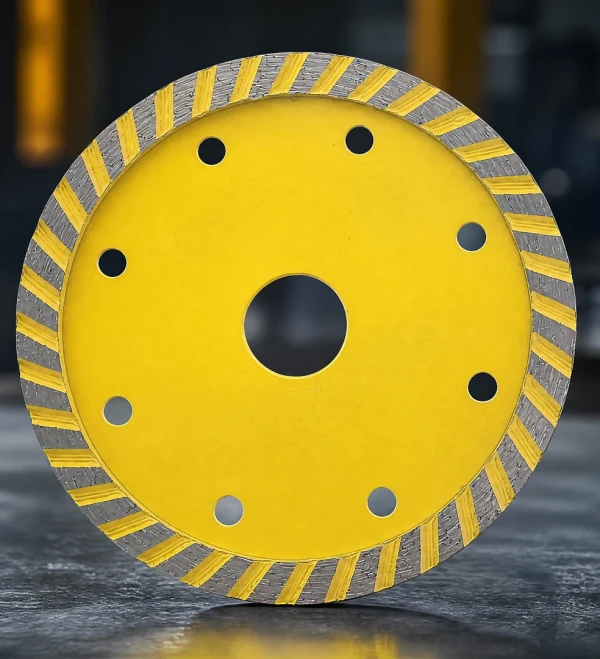
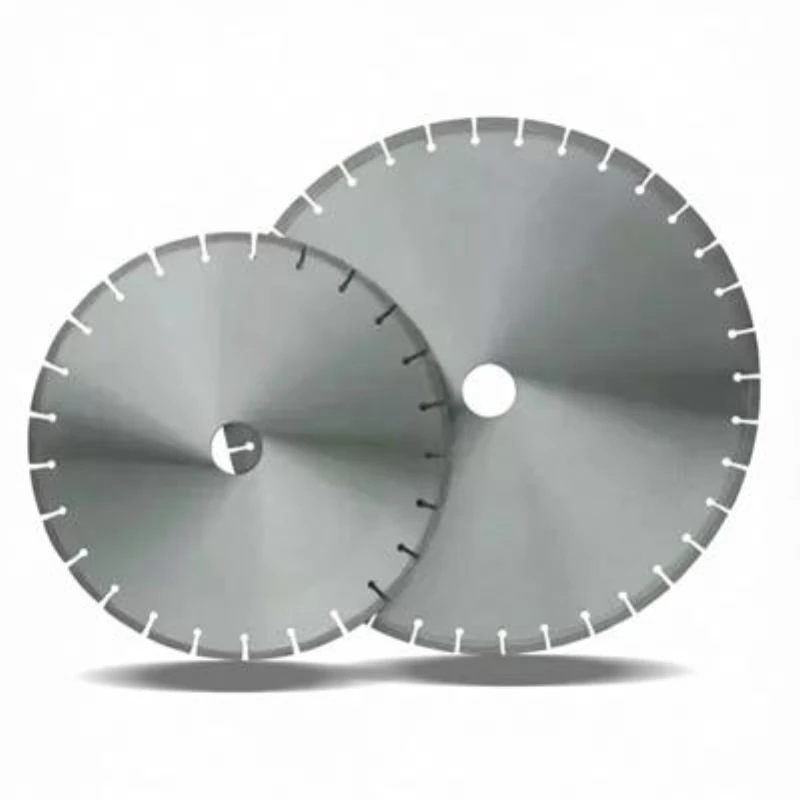
| Segmented saw blade | It has gaps between cutting segments. It removes chips and heat well and reduces heat fade. It has medium bond matrix strength and resists jamming. It cuts fast for heavy general work such as red brick, normal concrete and common stone. It works for grooving, wall cutting and road cutting and is the most common engineering blade. |
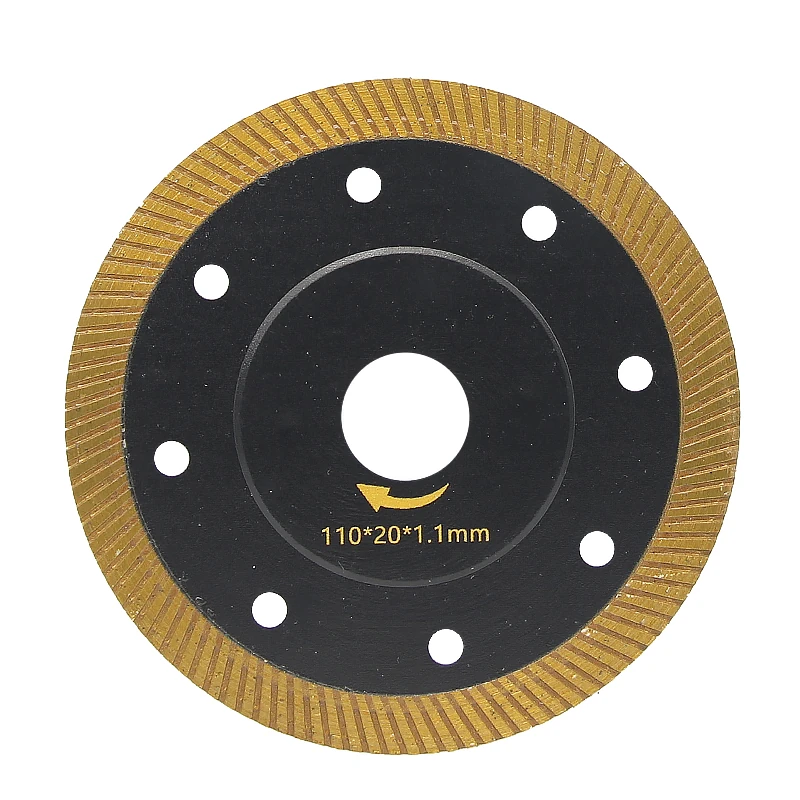
| Turbo saw blade | It has curved dense turbo teeth. Diamond grains spread evenly. It runs with little shake and makes smooth cuts. It reduces chipping and rough edges. It balances sharpness and wear resistance. It cuts marble, granite and full‑body tiles. We use it for fine trimming, precise cutting and shaped work in decoration. |
| Continuous rim saw blade | It has a full closed rim without gaps. It runs smoothly without shock. It cuts thin fragile materials cleanly. It works for thin tiles, microcrystalline stone and plasterboard in home fine cutting. But it removes chips and heat poorly. It cannot handle deep, heavy or frequent continuous cutting. |
10.Tips for Special Blades for Popular Materials & Machines
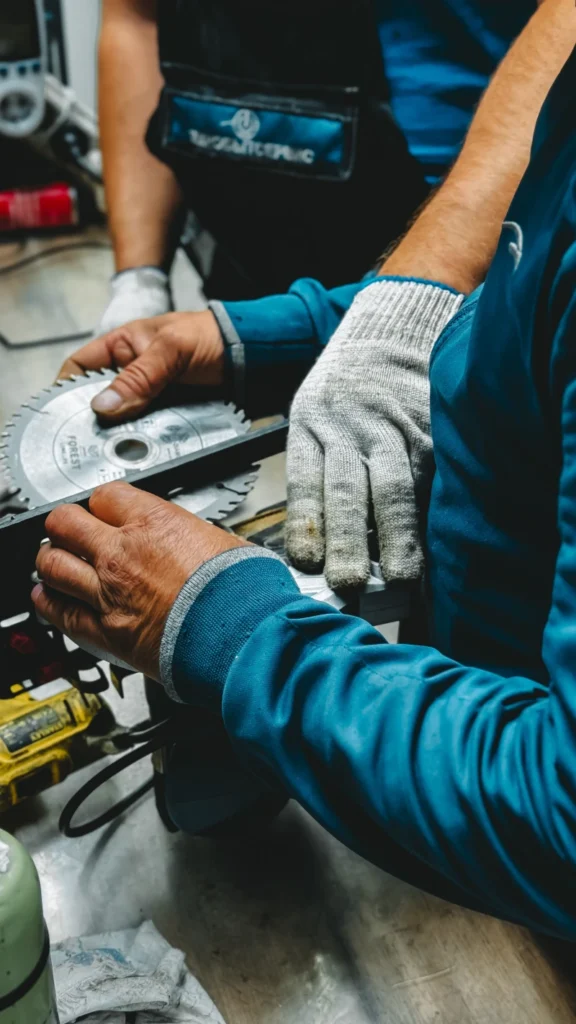
Match the blade structure, size and bond matrix formula to your material and machine. Wrong choices cause cutting defects. We cover three common choices: diamond cutting discs for ceramic tiles, tile cutting discs for angle grinders and 14‑inch diamond saw blades for concrete.
10.1 Diamond cutting discs for ceramic tiles
Tile is fragile. Pick thin turbo or continuous rim blades with evenly spread diamond grains. Use medium bond matrix hardness to lower grinding impact and prevent chipping or glaze damage. They make clean cuts and edges for glazed tiles, full‑body tiles and microcrystalline stone.
10.2 Tile cutting discs for angle grinders
Angle grinders are fast hand‑held tools. Choose blades with standard hole size and good coaxiality. Use light thin rims to reduce shaking at high speed. The blade must resist short‑term heat damage to prevent diamond dulling during dry cutting. This improves cutting precision and safety.
10.3 Tips for 14‑inch diamond saw blades for concrete
14‑inch large engineering blades fit powerful floor cutters. Choose segmented blades. Check bond matrix impact resistance and wear resistance. Good chip and heat handling supports heavy cutting of concrete with coarse stones. Match the shaft size exactly to avoid unsafe unbalanced installation.
11.FAQ
Q1: What blade cuts concrete?
Choose segmented blades. They remove chips and heat well and resist heat fade for concrete with coarse stones.
Q2: Can I use wet‑cut blades for dry cutting?
Not recommended. Their bond matrix cannot stand high heat. Dry cutting makes diamond grains dull or fall off.
Q3: Why does the blade cut slowly or turn dull easily?
Mismatched diamond concentration or bond matrix wear resistance. High heat and heavy work make grains dull fast.
Q4: What are the differences between the three tooth types?
Segmented blades for rough heavy cuts; turbo blades for fine cuts; continuous rim blades for thin fragile materials.
Q5: Blade types and service life?
They are grouped by tooth shape and grade. High‑end blades last 3–5 times longer than budget blades.
Q6: Do they contain real diamonds?
Which is better: tungsten carbide blades or diamond blades? A: They use man‑made diamond, not natural diamond. Diamond blades have higher hardness and better wear resistance.
12.Summary
Budget and high‑end diamond saw blades differ greatly in bond matrix technology, diamond formulation, cutting precision, service life and working conditions. Follow four rules to choose: material hardness, work frequency, working conditions and budget. For light, occasional work on soft materials with tight budgets, budget blades give better value. For frequent heavy work, hard materials or high‑precision engineering jobs, pick high‑end blades. Their strong heat resistance, stable structure and long life reduce hidden costs and bring better long‑term work results.