-
Blake.Chu sales consultant
-
Email: 113217160@qq.com
-
Phone/WeChat +86 19129108136
How to Choose a Diamond Saw Blade
Diamond saw blades for marble get high praise from industry experts and business owners. They are widely used in stone‑processing work, and many factories develop and produce them. Some products reach top international standards. Even so, these blades still have weak points.
They need improvement in stiffness, toughness, mechanical strength, accuracy, size tolerance and service life. Some assembled marble diamond saw‑blades bend or run off track. People have to throw them away when they are only half worn out. Small marble diamond saw‑blades must cut sharply and avoid chipping stone edges. Many products cannot meet these real‑world user needs.
For best results, pick the right diamond saw blade for your work. Follow these key points below:
Pick the Right Diamond Grain Size
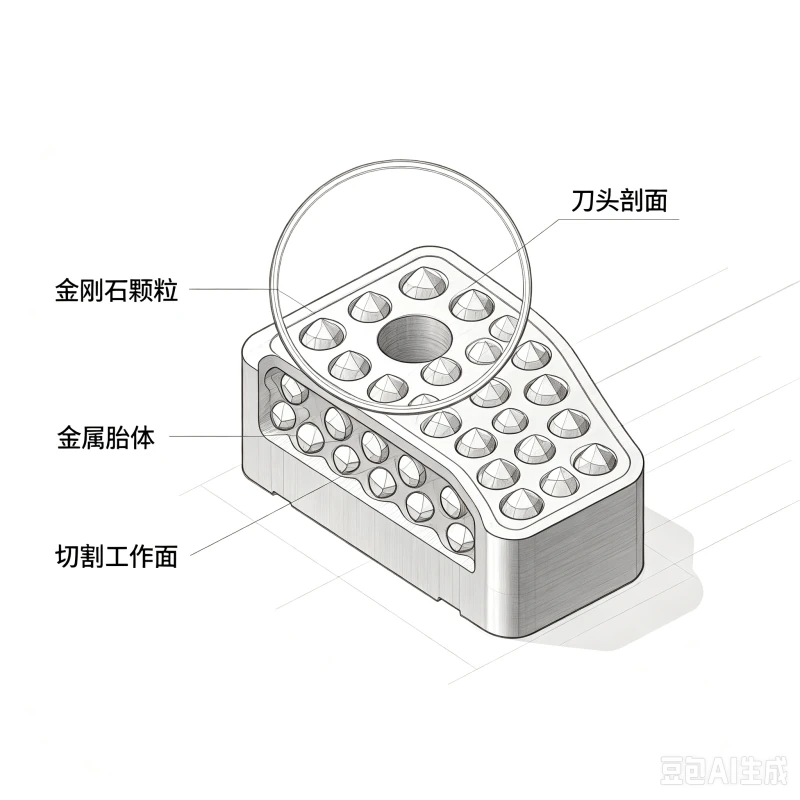
Large, single‑size diamond grains make blade segments sharp. You cut stone faster, but the segment becomes easier to break. Fine grains, or mixed fine‑and‑large grains, make the blade last longer, yet cutting speed goes down. For balanced performance, 50/60 mesh diamond grain works best for most cases.
Choose Proper Diamond Concentration
Within a normal range, higher diamond concentration makes the blade less sharp and slows cutting speed, but the blade lasts much longer. Too‑high concentration will make the blade dull. Low concentration with large grains helps you cut faster.
You may set different concentration for different parts of one segment. For a 3‑layer or multi‑layer segment, use lower concentration for the middle layer. A middle groove forms while cutting. This stops the blade from swinging sideways and gives better stone cutting quality.
Select Suitable Diamond Strength
Diamond strength decides cutting performance. If strength is too high, diamond grains hardly break. They get polished smooth during work and lose sharpness, so the tool works poorly. If strength is too low, grains crack under impact and cannot finish cutting tasks. We suggest diamond strength between 130 N and 140 N.
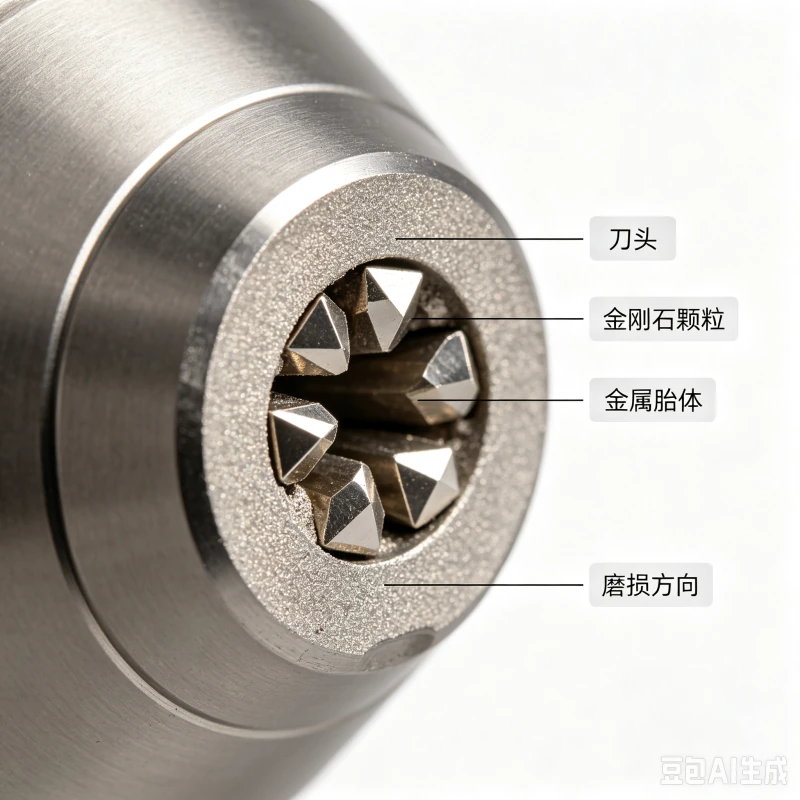
Pick Correct Bonding Material
Blade performance does not only depend on diamond itself. It comes from the whole composite segment made of diamond and bonding metal. For soft stone such as marble, use copper‑based bonding material. Copper‑based metal sinters at low temperature. It has low strength and hardness but good toughness. However, it does not hold diamond tightly.
Add tungsten carbide (WC or W₂C) as the frame material. Mix in proper cobalt to lift strength, hardness and bonding force. Put in small amounts of low‑melting‑point metals like Cu, Sn and Zn as binding parts. Keep main powder below 200 mesh and extra added powder below 300 mesh.
Set Suitable Sintering Process
Higher temperature makes the metal base denser and stronger. If you hold high temperature too long, bending strength of the base and diamond segment rises first and then drops. The recommended setting is sintering at 800 ℃ for 120 seconds to get good overall performance.
Notes for Common Diamond Saw Blade Types
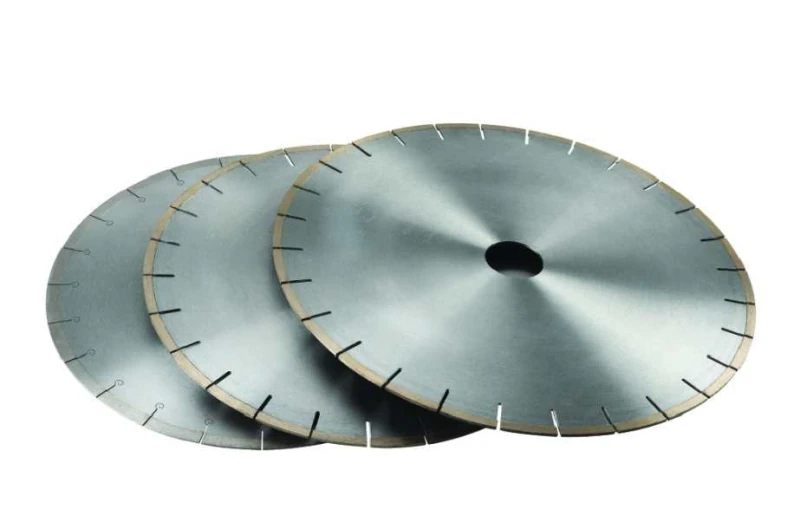
- Continuous‑rim saw blade This blade has connected cutting teeth. Factories usually make it with sintering methods and bronze‑based metal. Add water while cutting for good results. Some versions have laser‑cut gaps on segments.
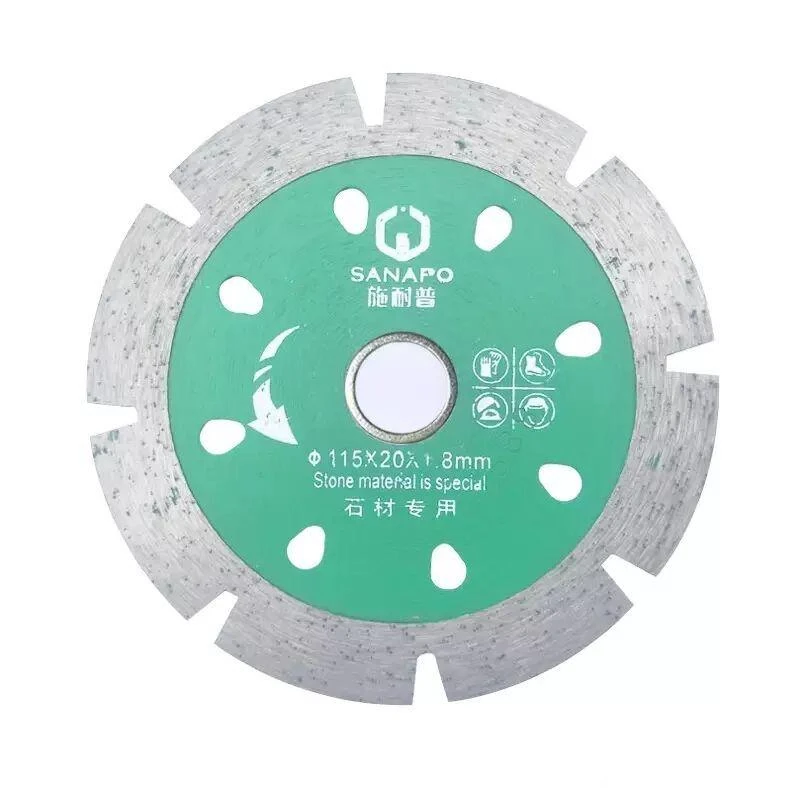
- Segmented saw blade Teeth sit with gaps between them. It cuts fast. You can use it for both wet‑cut and dry‑cut jobs.
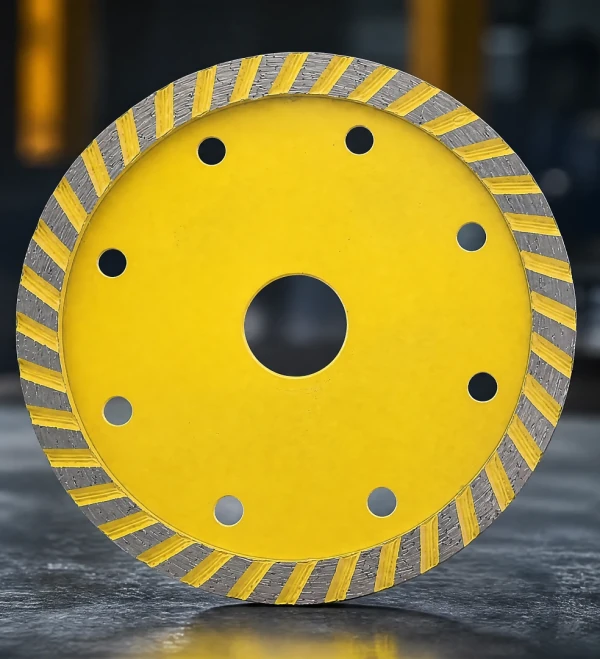
- Turbo saw blade It combines advantages of the above two types. Its teeth form even turbo‑shaped bumps and dips. It cuts faster and serves for a longer time.
Conclusion
Choosing a suitable marble diamond saw blade depends on reasonable matching of diamond grain size, concentration, strength, bonding materials and sintering technology. Proper parameter settings balance cutting sharpness, working efficiency and service life, and effectively solve common problems such as blade deformation, deviation and stone edge chipping. Users can select continuous‑rim, segmented or turbo blades according to actual working conditions to achieve stable, high‑quality and cost‑effective marble cutting results.