-
Blake.Chu sales consultant
-
Email: 113217160@qq.com
-
Phone/WeChat +86 19129108136
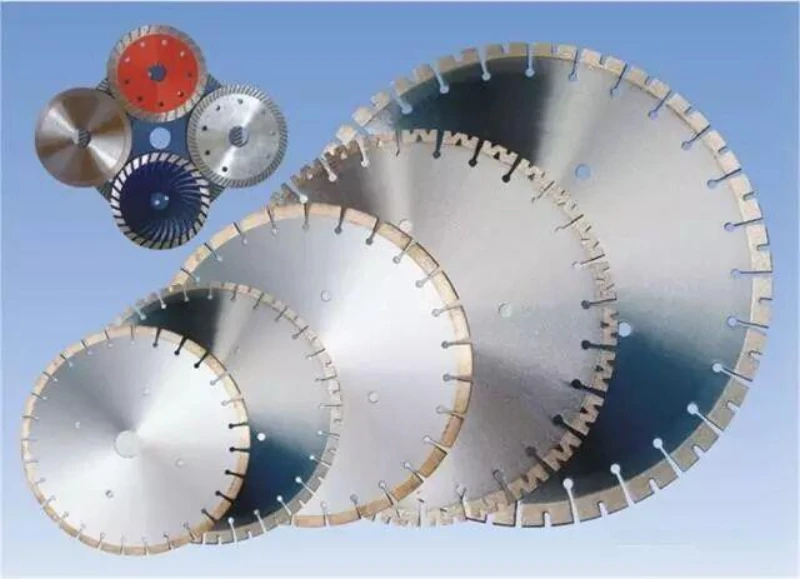
How long does a diamond saw blade last
Key‑Influencing Parameters for Diamond Saw Blade
Diamond saw blade are essential tools for stone mining and processing. Many conditions decide their cutting efficiency and service life. This article sums up and analyzes these main parameters below.
Sawing Process Parameters
-Peripheral Line Speed
In real‑world work, machine conditions, blade quality and stone properties limit the line speed of diamond saw blade. To get the best service life and cutting efficiency, workers choose proper line speed based on different stone types. When you cut granite, set the line speed between 25 m/s and 35 m/s. For hard‑to‑cut granite with high quartz content, pick the lower value in this range. When you make granite tiles with small‑diameter saw blades, the line speed can reach 35 m/s.
-Depth of Cut
Cutting depth strongly relates to diamond wear, effective cutting, blade stress and stone features. In general, you use a smaller cutting depth when the saw blade runs at high line speed. Modern equipment supports cutting depth from 1 mm to 10 mm. When large‑diameter blades cut rough granite blocks, control depth at 1‑2 mm and lower the feed speed at the same time.
Within safe limits of machine power and blade strength, you may use a larger cutting depth to raise working efficiency. If you need smooth finished surfaces, choose shallow‑depth cutting instead.
-Feed Speed
Feed speed means how fast you push stone toward the rotating blade. It changes cutting output, blade stress and heat dissipation in cutting zones. You set feed speed according to stone hardness and texture.
For soft stone such as marble, you can raise feed speed properly. Too‑low feed speed will not improve cutting results. For fine‑grained, uniform granite, you also increase feed speed. Slow feed will quickly wear flat diamond cutting edges.
When you cut coarse‑grained granite with mixed hard‑soft zones, you must reduce feed speed. Otherwise strong vibration will crack diamond grits and lower cutting performance. For granite cutting, common feed speed stays from 9 m/min to 12 m/min.
Other Important Influencing Factors
-Diamond Grit Size
Common diamond grit sizes range from 30/35 to 60/80 mesh. You select finer grit for harder rock. Under equal pressure, fine diamond grit keeps sharper edges and cuts hard rock more easily.
Large‑diameter blades focus on fast cutting, so they use coarser grit like 30/40 or 40/50. Small‑diameter blades value smooth cut surfaces rather than high speed, so workers apply finer grit such as 50/60 or 60/80.
-Segment Diamond Concentration
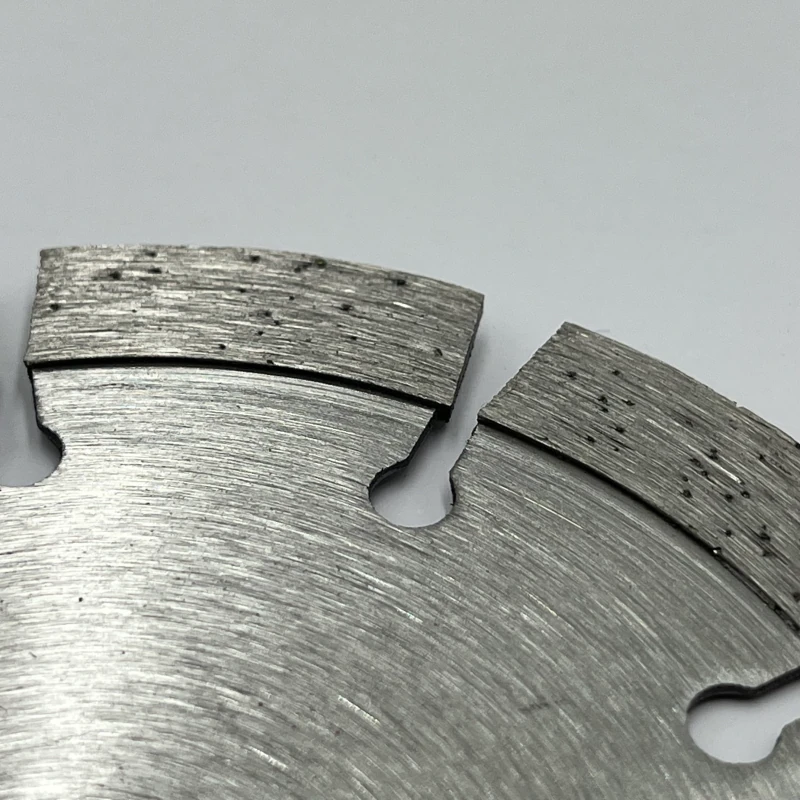
Diamond concentration describes how densely diamond particles sit inside the working metal segment (diamond weight per unit volume). Industrial standards define 100 % concentration as 4.4 carats of diamond inside each cubic centimeter of working matrix; 75 % concentration equals 3.3 carats per cubic centimeter. Volume‑based concentration marks 100 % when diamond takes up one‑quarter of total segment volume.
Higher diamond concentration can extend blade life because more grains share cutting force and reduce load on each single diamond particle. Yet higher concentration also raises production cost. So factories search for the most cost‑effective concentration value, and this ideal value rises along with cutting speed.
-Bond Hardness of Cutting Segments
In most cases, harder bond material brings stronger wear resistance. You choose high‑hardness bond for highly abrasive rock. You pick soft bond when you cut soft stone. You use medium‑hard bond for rock that is both hard and heavily abrasive.
-Force Effect, Thermal Effect and Wear‑Related Damage
While diamond saw blade cut stone, alternating loads such as centrifugal force, cutting force and cutting heat act on the whole blade.
Saw‑Blade Wear and Damage Caused by Force and Thermal Effects
-Force Effect
During cutting, axial force and tangential force press against the rotating saw blade. Circumferential and radial forces bend the blade. The blade waves in the axial direction and forms dish‑shaped deformation in the radial direction. These two deformations create uneven stone cuts, more stone waste, loud noise and heavy vibration. They make diamond segments break early and shorten overall blade life.
-Thermal Effect
Old theories state heat mainly causes two failures: diamond graphitization inside segments and early diamond drop‑off from thermal stress between diamond and metal matrix.
New research finds most cutting heat flows into cutting segments. The arc contact zone only reaches 40‑120 °C, yet tiny spots where diamond grit touches rock hit 250‑700 °C. Coolant liquid mainly cools the wide arc zone and barely lowers temperature on single grit points. Such temperatures will not turn diamond into graphite, but they change friction conditions and build thermal stress between diamond and bond materials. This completely changes how diamond fails in service. Studies confirm thermal effect ranks as the top cause for saw‑blade damage.
-Forms of Wear and Damage
Combined force and thermal effects make saw blades wear out after working hours. We observe several main failure patterns: abrasive wear, partial grain breakage, large‑scale segment breakage, grit drop‑off and mechanical scratches along cutting direction.
- Abrasive wear: Diamond grains keep rubbing against stone workpieces. Their sharp edges turn flat and lose cutting power; friction grows larger. Cutting heat forms thin graphitized layers on diamond surfaces and speeds up wear.
- Partial grain breakage: Alternating thermal stress plus changing cutting force create small fatigue cracks on diamond particles. Broken grains expose brand‑new sharp edges. This counts as a desirable self‑sharpening wear mode.
- Large‑scale breakage: Impact load when diamonds enter and exit stone chips off whole prominent diamond grains. Those grains wear away too fast.
- Grit drop‑off: Repeated cutting force shakes diamond grains loose inside bond material. At the same time cutting heat softens the wearing metal bond. The bond loses its holding power. Grains fall out once cutting force overcomes the gripping force from matrix.
Every wear form closely connects with load and temperature that diamond grains receive. Cutting techniques plus cooling‑lubrication conditions decide both load level and working temperature.
Conclusion
Proper selection of sawing parameters, diamond grit, concentration and bond hardness helps control force‑thermal wear, optimizes the overall performance of a diamond saw blade and delivers stable, high‑efficiency stone‑processing results.