-
Blake.Chu sales consultant
-
Email: 113217160@qq.com
-
Phone/WeChat +86 19129108136
Can a Diamond Saw Blade Cut Metal? Why You Should Be Careful
Ask any worker rushing to finish a job. They will shrug if you ask whether a diamond saw blade can cut metal. That attitude changes once sparks fly. Diamond segments chip off, and you burn money faster than you cut steel.
Using blade specs that do not match your work leads to long downtime. Workers face safety risks, and you spend more on replacement blades. Pick the correct blade, and every cut stays clean, cool and predictable.
Core Facts
Diamond saw blades work great on brittle materials. However, they struggle with ductile metal. Wrong bond materials cause glazing, overheating and segment loss.
- Soft bonds plus coarse grit expose new diamond grains. They cut metal faster. Fine grit creates smoother cuts but wears slowly.
- Balance cutting speed and blade life. Slow down your feed rate when cutting steel or iron. Lower heat helps segments last longer.
- Choose blades made safe for metal cutting. Match the arbor size. Use laser-welded, sintered bond blades. Check for vibration reduction features.
- Always use wet cutting. Control dust. Wear PPE. Install firm blade guards. These steps let you make safe, exact metal cuts.
Can a Diamond Saw Blade Cut Metal? 68% Failure Rate
Let us look at real work conditions. Can a diamond saw blade cut metal, or will it cause trouble? The short answer: yes, but you need the correct setup. Without it, blade failure happens quickly and messily.
Why 68% of Diamond Blades Break When Cutting Ductile Iron
The main problem: ductile iron creates heavy friction and extreme heat during cutting.
- Material traits
- High toughness traps metal chips
- Temperatures jump sharply in metal cutting
- Tool mismatches
- Blades rated for the wrong materials
- Weak welds on blade segments
Chain of Failure
Blade glazes → blade damage → segments fall off → blade shatters
Practical Rule
If the bond and segment design do not fit ductile iron, the blade cannot cut metal safely.
Handheld saws carry bigger safety risks. Their load stays unstable during operation.
How Bond Type and Diamond Grit Change Metal Cutting Results
The mix of bond material and diamond grit directly controls cutting performance.
- Softer blade matrix: exposes new abrasive grains and speeds up steel cutting
- Hard bonds: last longer on masonry but stall when cutting metal
- Fine grit: makes narrower, smoother cuts with less shaking
- Coarse grit: bites material faster, creates more vibration and wears quicker
A 2025 industrial tool report shares recent test results. Optimized bond formulas lift metal cutting output by 18–27% and stop early wear.
In short: a diamond saw blade can create clean metal cuts only when its material formula fits the job. JZC blades handle mixed materials well and keep steady cutting performance.
Cutting Speed vs. Blade Life: A Common Challenge in Metal Work
- Speed up feeding: cuts finish faster, but the blade wears out sooner
- Slow down feeding: cleaner cuts, longer blade service life
- Balance working settings: match RPM and feed rate to material thickness
- Reach the best state: aim for steady sparks and avoid overheating
Many people keep asking: can a diamond saw blade cut metal? The honest answer: it works only when speed, pressure and cooling work together. JZC setups easily hit this balanced state without burning through blades quickly.
5 Steps to Pick Diamond Blades Safe for Metal Cutting
Choosing the proper blade feels confusing. Can a diamond saw blade cut metal safely and cleanly? Yes, if you set everything right. This simple guide helps you make smooth, cool and controlled cuts.
Step 1: Match Arbor Size and Core Material for Steel Cutting
A mismatched arbor size makes the diamond blade shake while running.
- Check the mounting hole against your tool specifications
- Match blade diameter to keep balanced rotation
- Select strong core material
- Reinforced blade cores handle heavy loads from steel cutting
Quick tip: stable operation solves half your problems when cutting metal with diamond blades. JZC blades fit tightly and stay rigid to reduce shaking and improve control.
Step 2: Select Segment Height and Width for Better Heat Dissipation
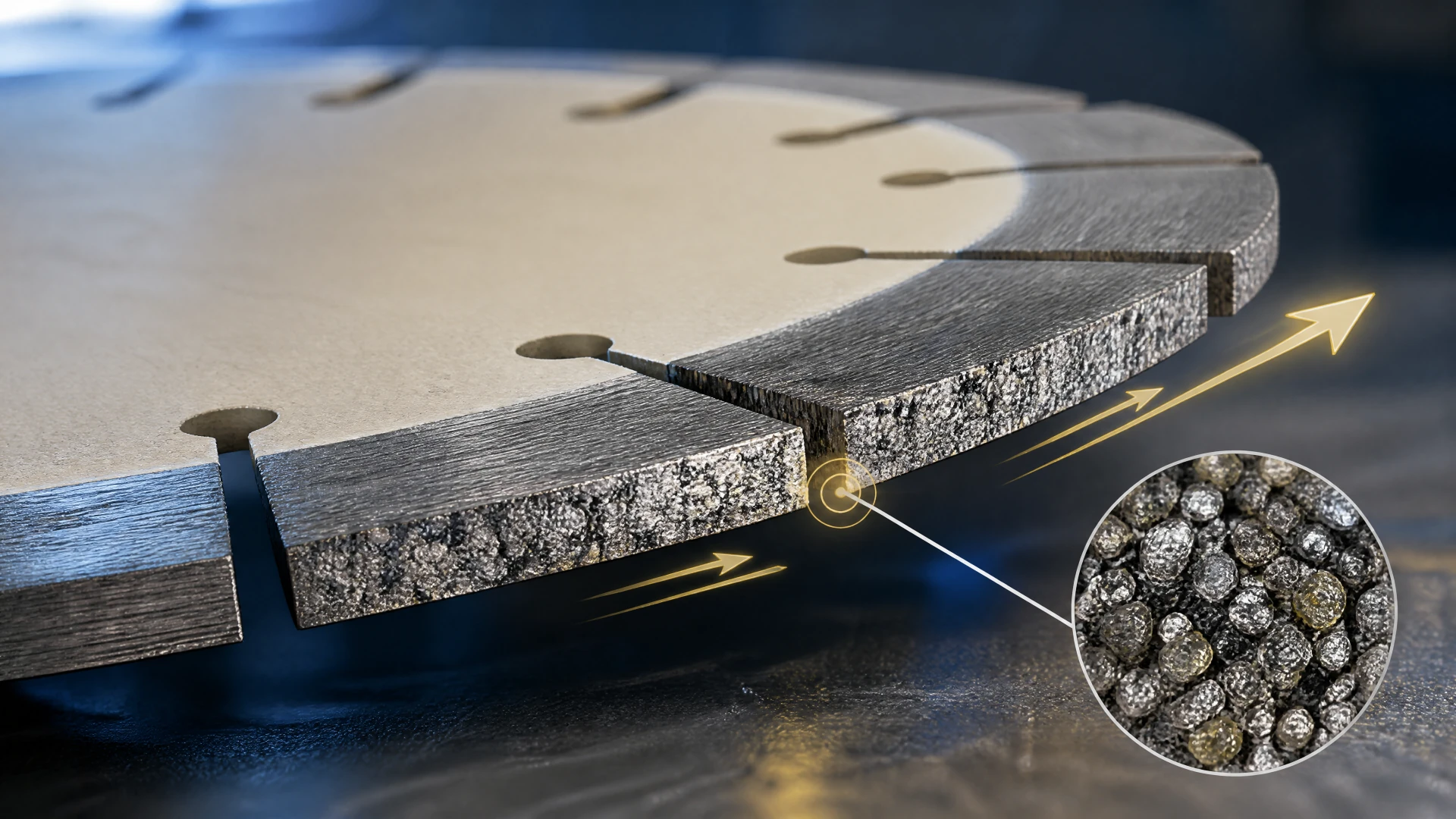
Think of blade segments as your cooling system. Larger diamond segments spread heat over a wider area. They improve heat dissipation and cutting efficiency.
- Better cooling = longer blade life
- Thicker segments resist glazing
Controlling heat makes metal cutting with diamond blades successful. JZC builds this idea into every blade design.
Step 3: Choose Laser-Welded Segments to Protect Gullets
Strong laser-welded segments hold up well under heavy stress.
- Firmly lock segments in place
- Stop gullets from cracking
- Lower overall blade wear
- Extend blade service life
If you worry about broken diamond blades during metal cutting, laser welding offers the solution. Post-2024 field tests from construction equipment reports prove laser-welded segments cut metal failure rates by over 30%.
Step 4: Compare Sintered Bond and Electroplated Bond for Wear Resistance
- Sintered bond: dense metal matrix, strong wear resistance. Diamond grains stay exposed steadily.
- Electroplated bond: sharp at first, thin surface coating, fast wear on metal.
Final call: pick sintered blades for long-lasting metal cutting work. JZC uses sintered bonds for heavy-duty jobs.
Step 5: Check Performance Standards — Vibration Control and Cut Quality
Adjust your focus to two key standards:
- Effective vibration reduction
- Keeps the blade stable
- High-quality cut surfaces
- Boosts cutting precision and surface finish
Small advantages add up. Smoother operation lowers operator tiredness and keeps every metal cut consistent.
Too Much Heat? Try Turbo Rim Blades
Heavy cutting creates heat fast. Many workers ask: should I use a diamond saw blade for metal or concrete? The answer depends on heat control. Turbo rim blades run cooler, steadier and more predictably.
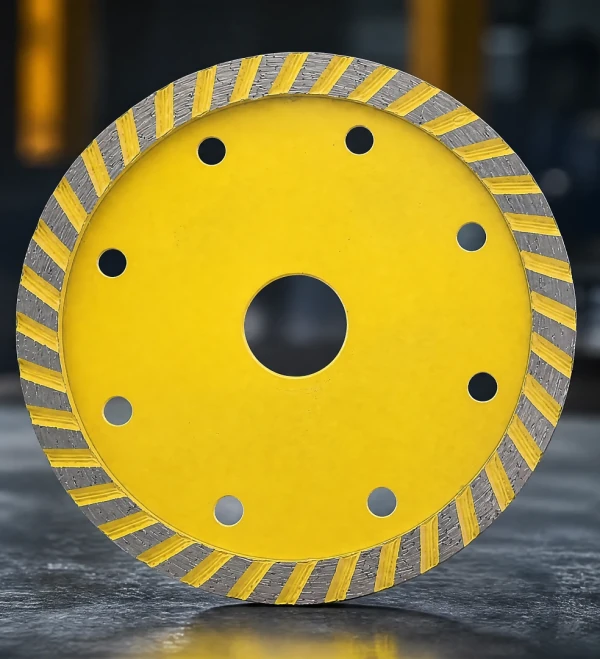
Turbo Rim Structure: Benefits of Cooling Holes and Steel Cores
To judge if a diamond blade cuts metal well, start with blade structure. A turbo rim blade is not just a ring with diamonds. Engineers build it for airflow and strength.
- Core design
- Steel core keeps its shape under stress
- Laser-cut cooling holes push air through cutting zones
- Balanced tension reduces shaking
- Cutting edge
- Dense segments keep diamonds exposed longer
- Improved bonding manages heat better
Result: the blade stays durable even on mixed materials.
Turbo rim blades can handle light contact with metal thanks to smart rim shapes and cooling. Still, manufacturers design them mainly for masonry work. JZC balances these features so users do not waste blades mid-job.
Heat Dissipation in Real Work: From Pavement to Reinforced Concrete
Heat ruins cutting performance. Observe how heat control changes results on different materials:
- Pavement cutting
- Creates steady friction
- Controlled heat keeps segments sharp
- Deep cuts into reinforced concrete
- Steel bars add cutting resistance
- Fast material removal prevents blade glazing
- Final performance
- Stable blade performance
- Longer service life and steady feed speed
2025 construction tool reports note improved cooling structures extend blade life over 30% on reinforced concrete.
To sum up: diamond blades can cut rebar while sawing concrete. Do not treat them as your main tool for cutting pure metal.
Safety First: Wet Cutting, Dust Control and Blade Guard Rules
Before you push your blade to limits, build safe working habits. Heat and dust appear quickly.
- Use water for wet cutting: it cools blades instantly. It also controls dust and creates cleaner cut lines.
- Safety rules you cannot skip: install proper blade guards.
- Wear full personal protective equipment.
- Stay alert to cutting dangers. Use each blade only for its designed materials.
JZC tools follow safety standards, but operators carry full responsibility. Even if someone claims diamond blades cut all metal, always select blades built for your exact task.
Blade Selection for Fabrication Shops: Safe Metal Cutting
Clean metal cuts do not rely only on power. You must match the blade to your task. People often ask: can a diamond saw blade cut metal? There is no simple yes or no. Results depend on setup, blade type and operating methods.
Handheld Saw vs Table Saw Diamond Blades
Context changes everything. Handheld diamond saws handle quick trimming jobs. Table saws deliver higher accuracy.
Key differences:
- Portability vs stability
- Fast passes vs smooth cut finishes
- Flexible blade choices vs fixed arbor hole sizes
Cutting mode options
- Wet cutting: cooler operation, cleaner edges
- Dry cutting: faster work, more sparks
Structural details
- Segment design controls heat and chip flow
- Thin kerf blades cut faster; thick rims offer higher durability
Both saw types can use diamond blades for metal. Table saws win on precision. Brands like JZC design blades for both tools and lower vibration.
Power Cutter Choices for Utility and Road Construction
Road crews face this question daily: can diamond blades cut rebar inside concrete? Power cutters fit this mixed work perfectly.
Simple workflow
- Match engine power to material density
- Pick abrasive blades or diamond blades for concrete cutting
- Adjust feed speed for asphalt cutting
| Tool Type | Material Mix | RPM | Estimated Blade Life (Hours) |
|---|---|---|---|
| Power cutter | Concrete + rebar | 4,500 | 12 |
| Walk-behind saw | Asphalt layers | 3,200 | 18 |
| Handheld saw | Thin metal edges | 5,000 | 8 |
| Table saw | Sheet metal | 3,600 | 20 |
Diamond blades cut metal in these setups, but matching matters most. JZC blades balance service life and cutting speed to avoid fast wear.
Essential PPE and Hearing Protection
Even if a diamond blade can cut metal safely, your protective gear decides risk levels.
Must-have equipment:
Safety glasses, face shield, work gloves, earmuffs, respirator, hard hat, steel-toe boots.
Important reminders:
Sparks fly quickly. Noise builds over time. Dust stays floating far longer than you expect.
After you confirm whether diamond blades cut metal, ask another critical question: can you operate safely? With proper PPE and tuned JZC blades, you create safe results.
Three Types of Diamond Cutting Tools: Usage Rules (Avoid Costly Mistakes)
1. Standard Diamond Saw Blades (For Stone / Concrete / Tile)
Suitable: tile, marble, granite, concrete, glass, refractory materials
NEVER cut: iron, stainless steel, angle steel, steel pipes, steel plates
Risk explanation:
Friction with metal creates extreme heat. High heat burns diamond grains and makes segments fall off. The blade easily slips or jams. It may shatter and cause serious injury.
2. Diamond Tipped Alloy Blades
Suitable: aluminum, copper, brass, aluminum profiles (non-ferrous metals)
Cannot cut: steel, stainless steel
3. Vacuum Brazed Diamond Cutting Discs (Main Choice for Metal)
Other names: diamond metal cutting disc, brazed diamond grinding disc
Suitable: thin steel plate, stainless steel, cast iron, rebar, steel pipes, all non-ferrous metals
Working principle:
Workers braze diamond grains fully onto the disc base. These discs resist heat better than standard sintered stone blades.
Limits: best for thin-walled and small workpieces. Resin abrasive wheels cut thick steel plates faster.
Quick Selection Chart
| Material to Cut | First Choice | Do Not Misuse |
|---|---|---|
| Rebar, thin steel plate, stainless steel tubes | Resin abrasive cutting wheels (common for angle grinders) | Sintered stone diamond blades |
| Aluminum, copper profiles | Brazed diamond discs / alloy saw blades | Stone diamond blades |
| Concrete, stone, tile | Standard sintered diamond blades | Risk damage and danger if used on metal |
Final Summary
Standard diamond blades built for tile, concrete and stone cannot safely cut steel and stainless steel. Extreme heat will destroy these blades and create explosion risks. You can select vacuum brazed diamond discs for thin metal and non-ferrous work, while resin abrasive wheels remain the top pick for thick steel and rebar. Always match each blade to its target material. Follow cooling rules, wear full protective gear and never cross-use cutting discs. Choosing the right tool protects your safety and stops unnecessary waste of money.