-
Blake.Chu sales consultant
-
Email: 113217160@qq.com
-
Phone/WeChat +86 19129108136
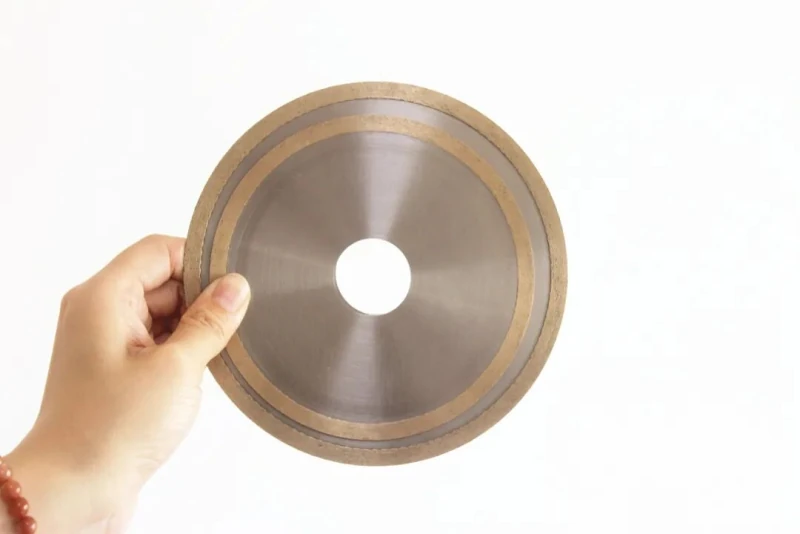
What Materials are Diamond Saw Blades Made of ?
Basic Principles and Functions of Matrix for Diamond Tools
Manufacturers produce diamond‑tool composites for Diamond Saw Blades by powder metallurgy. They mix tiny diamond grains with metal powders and use hot‑press sintering to make solid sintered bodies. The metal matrix bonds and locks diamond grains inside.
When surface diamond grains wear away in grinding work, inner diamond grains keep showing up. For Diamond Saw Blades, the matrix around diamonds must hold diamonds firmly and wear at a matching rate with the workpiece. New diamond cutting edges keep appearing for full use. This brings high cutting speed and good cutting quality for diamond tools. So the matrix needs strong holding power and high density. Therefore, the matrix material that wraps diamond grains becomes one key factor affecting diamond‑tool performance.
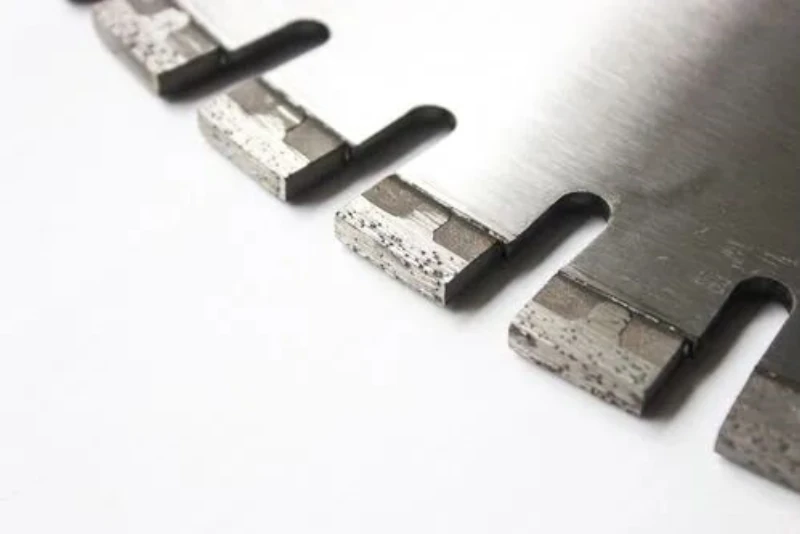
The diamond‑segment matrix holds diamond grains tight and lets diamonds deliver full cutting power. When you develop and produce diamond saw blades segments, you focus on four main points:
- The matrix’s holding power for diamond grains;
- Wear matching between matrix and diamond for your target workpiece;
- Suitable manufacturing process conditions;
- Reasonable production cost.
Two Holding‑Force Mechanisms of Matrix for Diamond Grains in Diamond Saw Blades
A matrix holds diamond grains through two types of forces: mechanical bonding force and chemical bonding force.
Mechanical Bonding Force
Mechanical bonding force comes from the matrix embedding diamond grains. The matrix’s elastic modulus mainly decides this force. Elements such as Cr, Mn, W or hard WC phases raise elastic modulus. They strengthen the matrix’s grip on diamonds and improve matrix wear resistance. However, too‑high wear resistance stops diamond edges from sticking out properly.
Besides, uneven shrinkage of the matrix during sintering and cooling builds stress around diamond grains. This tightens embedding and lifts holding power. Some production processes force‑cool segments right after hot pressing for this purpose.
Chemical Bonding Force
Chemical bonding force forms from weld‑style connections or chemical bonds between diamond and matrix. It extends segment service life. It also pushes diamond grains further out of the matrix. Larger chip‑removal spaces form and cutting efficiency rises.
To improve chemical bonding force, you boost the matrix’s wettability and chemical‑bonding ability toward diamond. Strong carbide‑forming elements like Ti and Cr help the matrix wet diamond. They also create carbides with diamond to increase bonding strength.
Yet these elements also erode diamond. Large carbides produce cracks or gaps and hurt cutting performance. Research shows you should add less than 0.1 at% of these strong carbide‑forming elements.
Coat diamond surfaces to raise chemical holding force. But you must match coatings with proper processes. You control carbide formation and keep stable interfaces. Otherwise, diamond surface metallization cannot work well.
Wear‑Matching Relationship among Diamond, Matrix and Workpiece
While the matrix holds diamonds firmly for cutting, it must wear together with diamonds. New cutting edges keep forming to keep cutting going. Many factors that increase mechanical holding power will disturb this matched‑wear effect.
Good coordination among diamond, matrix and workpiece is the hardest skill in diamond‑segment production. It is also a special feature of diamond saw blades matrices. It connects with workpiece wear resistance, diamond grade and processing methods.
When stone has higher hardness and higher density, you choose diamond grains with higher strength, finer grain size and lower concentration. At the same time, you lower matrix hardness and matrix wear resistance. When stone shows high wear resistance, you pick diamond grains of high strength, coarse grain size and high concentration. You also increase matrix hardness and wear resistance. You follow opposite rules for opposite stone properties.
Other factors change this relationship too. For example, larger saw‑blades create bigger cutting force. You use higher‑grade diamond and improve matrix wear resistance accordingly.
Matching Relationship among Diamond, Matrix and Workpiece
| Stone Property | Diamond | Matrix | ||||
| Strength | Grain Size | Concentration | Hardness | Wear Resistance | ||
| Hardness | High | High | Fine | Low | Low | Low |
| Low | Low | Coarse | High | High | High | |
| Density | High | High | Fine | Low | Low | Low |
| Low | Low | Coarse | High | High | High | |
| Wear Resistance | High | High | Coarse | High | High | High |
| Low | Low | Fine | Low | Low | Low | |
Judgment Rules for Matrix Compatibility
In research and real tests, you judge matrix compatibility by observing wear conditions on segment surfaces with two simple rules:
- If most diamond grains turn blunt, reduce the wear resistance of the matrix.
- If most diamonds fall off and leave shallow pits, increase matrix wear resistance. If pits sit deep, the matrix holds diamonds poorly. You mainly improve its chemical bonding force.
These facts tell you how to set matrix formulas. Matrix wear resistance must match the grinding ability of diamond and workpieces. In cutting work, the matrix lets diamonds stick out enough for cutting, yet prevents diamonds from sticking too far and falling off early.
An overly‑soft matrix wears faster than diamond. It usually makes diamonds fall off too soon. On the contrary, an overly wear‑resistant matrix wears very slowly. After old diamonds wear out, new diamonds cannot stick out well. Finally, diamonds get polished flat and lose cutting ability. The matrix’s wear resistance comes from its mixed elements and sintering processes for matrix powder.
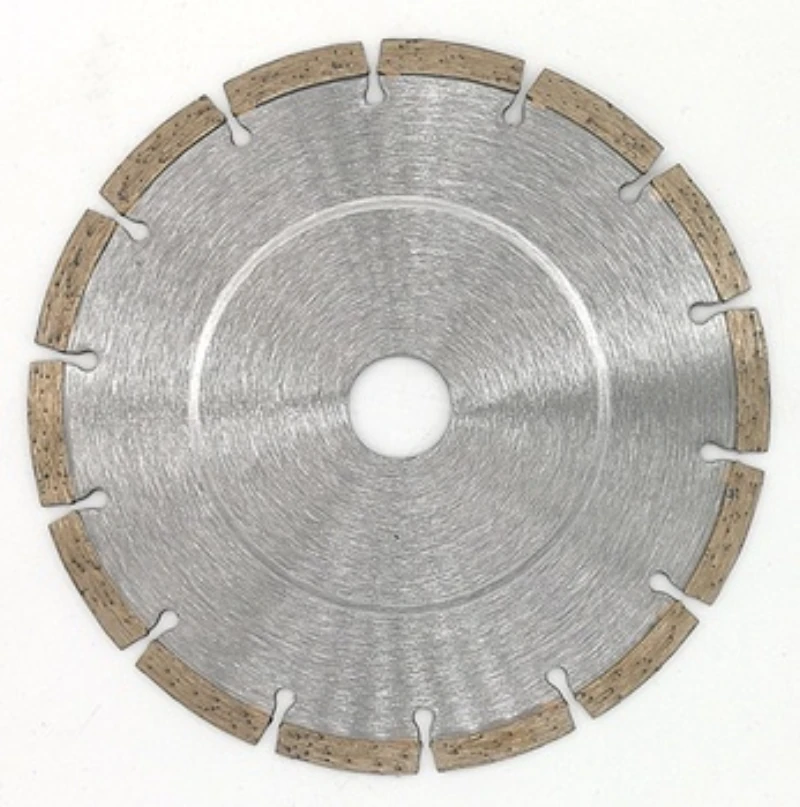
Property Comparison of Common Segment Matrix Materials
People mainly use cobalt‑based, iron‑based and copper‑based materials for diamond‑segment matrices.
Cobalt offers good wettability for diamond, high elastic modulus and strong high‑temperature strength. Its suitable sintering temperature easily meets requirements for diamond holding power and matched wear between diamond layers. Cobalt plays an irreplaceable role in diamond‑tool manufacturing, especially for segments under heavy‑load and high‑efficiency cutting. But cobalt costs more.
Copper‑based or bronze‑based matrices cost little and process easily. However, they do not wet diamond well. They also have low strength and poor holding power for diamonds. They only suit light‑load cutting for soft materials or grinding tools.
Iron has medium elastic modulus and good wettability for diamond. Its low price makes it a great matrix choice. Iron‑based matrices work excellently when you cut highly‑wear‑resistant materials. Still, iron easily over‑erodes diamond and weakens diamond strength. Its poor high‑temperature performance narrows its usable range for matching diamond and workpieces.
Summary
This text describes matrix fundamentals for Diamond Saw Blades. The matrix holds diamonds through mechanical and chemical forces. Good wear matching among diamond, matrix and workpiece guarantees cutting performance. We select proper matrix materials and formulas based on stone features to obtain stable cutting and long service life.