-
Blake.Chu sales consultant
-
Email: 113217160@qq.com
-
Phone/WeChat +86 19129108136
What is a Diamond Saw Blade
A diamond saw blade is a cutting tool. People widely use it to cut hard‑brittle materials such as concrete, refractory materials, stone and ceramics. It has two main parts: base body and cutting segments. The base body supports and holds cutting segments. Cutting segments do all cutting work and wear away with use, but the base body stays intact.
Cutting segments work because they hold diamond grains. Diamond is the hardest known material. These grains rub and cut target materials. Metal wraps and locks diamond grains inside each cutting segment.
Process Classification
- Sintered diamond saw blade Workers press and heat raw materials for sintering. It includes cold‑press sintered type and hot‑press sintered type.
- Welded diamond saw blade It has brazed style and laser‑welded style. For brazed saw blades, workers melt filling metal at high heat to join cutting segments to the base body. High‑frequency induction brazed saw blades and vacuum brazed saw blades are common examples. For laser‑welded saw blades, high‑heat laser beams melt contact edges. This creates a strong metallurgical bond between cutting segments and the base body.
- Electroplated diamond saw blade Workers stick segment powder onto the base body through electroplating. China has gradually stopped making electroplated diamond products since 2012. This manufacturing process creates heavy pollution.
Appearance Classification
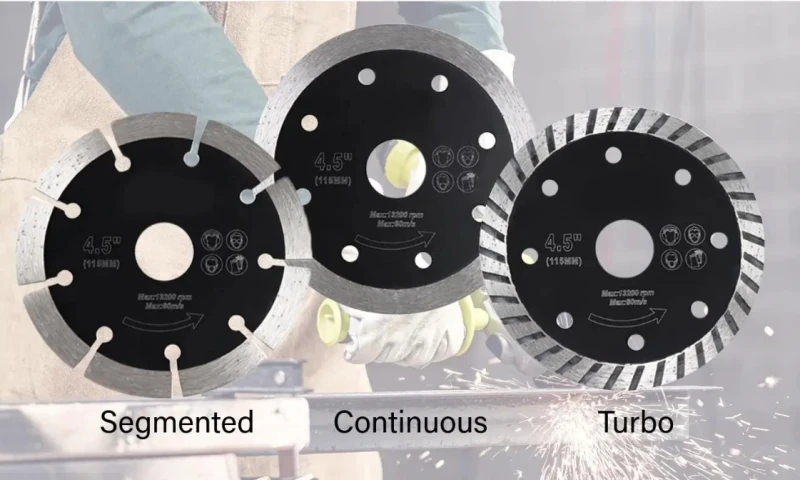
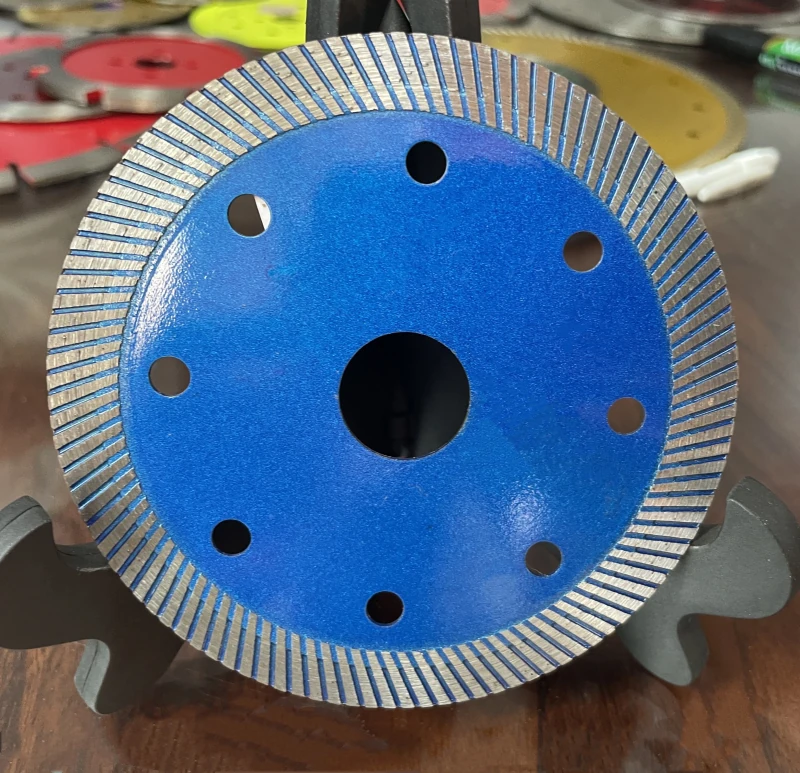
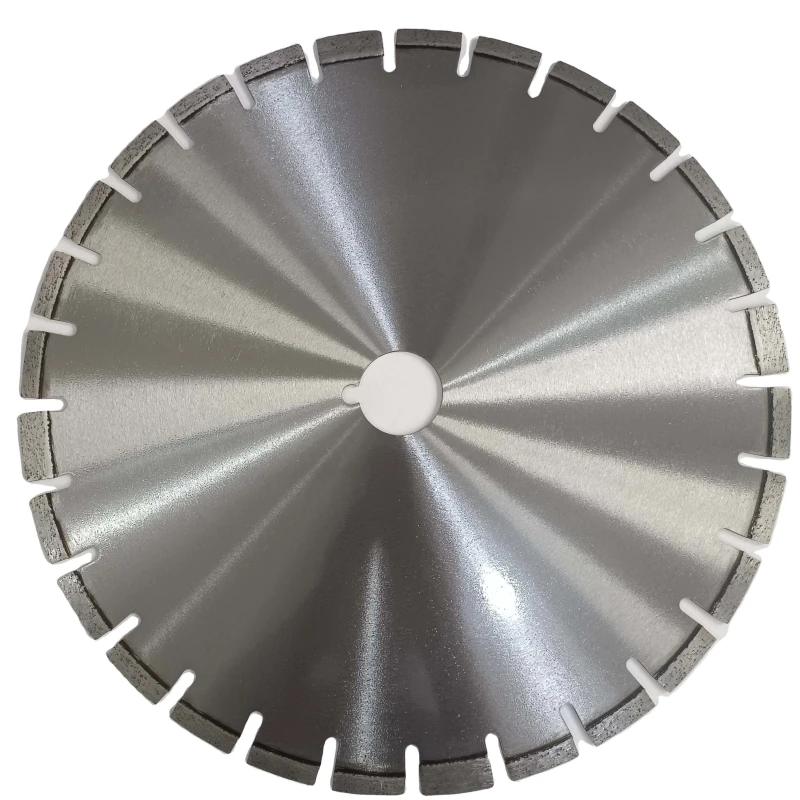
- Continuous‑rim saw blade This blade has connected whole teeth. Factories mostly make it by sintering. Bronze‑based metal acts as the main bond material. Users must add water during cutting for good results. Some models have laser‑cut gaps on cutting segments.
- Segmented saw blade Its teeth sit separate from each other. It cuts fast. It works for both dry cutting and wet cutting.
- Turbo saw blade It takes good points from continuous‑rim and segmented blades. Its teeth form even turbo‑shaped bumps and dips. This design raises cutting speed and makes service life longer.
People pick different diamond saw blades for different materials. Different metal‑powder formulas fit different material features. These choices directly change product quality, cutting result, pass rate, cost and profit.
Many factors affect circular diamond saw blade efficiency and service life. They include sawing parameters, diamond grain size, diamond concentration and bond hardness. Main sawing parameters are saw‑blade linear speed, sawing depth and feed speed.
Manufacturing Methods for Diamond Cutting Tools
Four main ways make diamond cutting tools today: thin‑film coated diamond tools, thick‑film diamond welded tools, sintered diamond compact tools and single‑crystal diamond tools.
2.1 Thin‑film Coated Diamond Tools
Workers use Chemical Vapor Deposition (CVD). They grow thin diamond films on strong, heat‑resistant base materials.
Silicon nitride ceramics, WC‑Co hard alloy and metal tungsten have thermal expansion rates close to diamond. They produce low thermal stress during film growth, so they work well as tool bases.
Cobalt inside WC‑Co hard alloy easily turns diamond into graphite. This weakens the bond between diamond film and base. Workers do pre‑treatment (usually acid etching to remove cobalt) before deposition.
CVD activates carbon‑rich gas under very low pressure. Carbon atoms gather in one area and build diamond crystal structures.
Popular CVD methods are microwave CVD, hot‑filament CVD and direct‑current arc‑jet CVD.
Advantages: Workers make complex‑shape cutters with these films, such as insert blades, end mills, reamers and drill bits. They cut many non‑metal materials. Cutting force stays small, parts barely deform, and machines run smoothly. Tools wear slowly. They suit fine finishing for high‑quality work‑pieces with strict size limits.
Disadvantages: The diamond thin‑film sticks weakly to the base. Users cannot re‑sharpen these tools.
2.2 Thick‑film Diamond Welded Tools
The full production flow has four steps: make large‑size thick diamond films; cut films into needed shapes and sizes; weld thick diamond films onto tool bases; grind and polish cutting edges.
-Make and cut thick diamond films
Direct‑current plasma‑jet CVD is the common method. Workers grow diamond onto mirror‑polished WC‑Co alloy. Diamond films fall off automatically when the base cools. This method runs fast (up to 930 μm per hour). Diamond crystals lock tightly together, yet the growth surface stays rough.
Diamond is hard, wear‑proof and does not conduct electricity. So workers use laser cutting. Laser cutting works in air, oxygen or argon gas. Lasers cut films to target sizes and machine tool clearance angles. It creates narrow cuts and high working speed.
-Weld thick‑film diamond tools
Diamond holds high interface energy against common metals and alloys. Ordinary low‑melting‑point alloys cannot spread over diamond. Diamond is very hard to weld.
Two main solutions fix this problem. Manufacturers add carbide‑making elements to copper‑silver solder, or they add metal layers onto diamond surfaces.
① Active brazing filler method
Workers use titanium‑mixed copper‑silver solder. They weld inside vacuum or inert gas without flux. One standard solder holds 68.8 wt% Ag, 26.7 wt% Cu, 4.5 wt% Ti. Factories produce this solder by arc melting or powder metallurgy.
Titanium works as an active material. It reacts with carbon and forms TiC. TiC improves wetting and bonding strength between diamond and solder. Operators heat materials to 850 °C, hold this temperature for 10 minutes, then cool slowly to lower inner stress.
② Weld after diamond surface metallization
Surface metallization adds metal layers onto diamond. Diamond gets metal‑like surface features. Workers usually plate titanium onto diamond. Titanium reacts with carbon and makes TiC. TiC mixes well with Ag‑Cu brazing solder.
Common titanium‑plating technologies include Physical Vapor Deposition (PVD: vacuum evaporation, vacuum sputtering, vacuum ion plating), chemical vapor plating and powder‑cover sintering.
PVD puts thin metal layers on diamond. Diamond temperature stays below 500 °C. PVD only creates physical sticking, no chemical metal bond. CVD triggers chemical reactions for strong metallurgical bonds, yet high heat may damage diamond.
– Edge grinding for thick‑film diamond tools
Available processing choices: mechanical grinding, hot‑metal‑disk lapping, ion‑beam etching, laser‑beam etching and plasma etching.
2.3 Sintered Diamond Compact Tools
Workers break thick diamond films by rolling and grinding to get diamond grains of 32‑37 μm average size. Or they make diamond grains with high‑temperature high‑pressure equipment.
Workers spread diamond grain powder over WC‑16 wt%Co alloy sheets. They separate layers with tantalum foil. Next they sinter the whole set at 5.5 GPa pressure and 1500 °C for 60 minutes. The finished sintered diamond compact makes turning tools with great wear resistance.
2.4 Single‑crystal Diamond Tools
Workers fix single diamond crystals onto small tool tips. Screws or pressure plates lock small tips onto tool holders. Three common fixing methods:
- Mechanical clamping: Workers grind diamond bottom and pressing surface flat. Pressure plates hold diamond tight on small tips.
- Powder metallurgy: Workers place diamond inside alloy powder. They press and sinter parts in vacuum to lock diamond firmly.
- Bonding and brazing: Workers use inorganic glue or other binders to hold diamond in place.
Diamond and tool bases have very different thermal expansion rates. For this reason, diamond may turn loose or fall off during work.