-
Blake.Chu sales consultant
-
Email: 113217160@qq.com
-
Phone/WeChat +86 19129108136
How to Install Diamond Blade on Circular Saw
1. When Should You Replace Your Circular Saw Blade?
Check cutting load, cut surface quality and blade condition. Higher cutting resistance and motor overload, chipping, burning and burrs on cuts indicate that the blade loses cutting performance. Replace it immediately if diamond segments wear down, the core deforms or cracks, teeth break or the arbor hole wears out. Poor blade balance causes heavy shaking and frequent jams. Do not judge blade aging only by surface scratches, as a subtly damaged blade may kick back or burst during operation.
2. Safety First: Prep Work Before Installing a Diamond Saw Blade
Unplug the circular saw to avoid accidental startup. Prepare a wrench, safety goggles, a dust mask and anti-slip gloves in advance. Clear dust and debris from your work area to ensure a clean operating environment. Check the tool’s nameplate to confirm parameter specifications. Make sure the saw’s arbor size and maximum blade diameter match your diamond saw blade. Inspect flanges and washers for wear and tear. Meanwhile, check the diamond blade for cracks, detached segments or bending, and never fit a damaged blade. Locate the rotation mark on the blade to prevent incorrect installation, which can effectively avoid equipment jams or blade bursts.
3. Matching a Diamond Blade for Your Circular Saw: Selection and Pre-check Rules
3.1 Pick the Right Diamond Blade
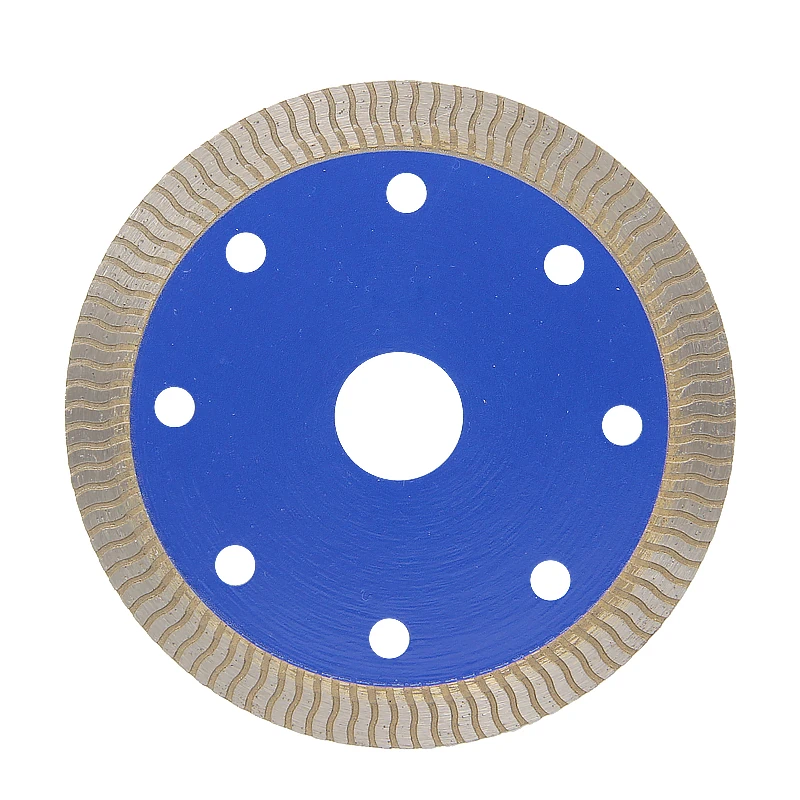
Match the blade to your saw’s rated RPM, arbor size and actual cutting material. The blade outer diameter cannot exceed the saw’s limit, and the bore must fit the spindle precisely. Choose PCD fiber cement blades for fiber cement boards, continuous rim diamond blades for tiles, and segmented diamond blades for stone and concrete. A mismatched blade will lose balance and may break under operating load.
3.2 Full Inspection of the Diamond Saw Blade
Thoroughly check the blade core for cracks or bending, and examine the blade surface for broken or detached diamond segments. Ensure flange contact surfaces are flat and washers are intact. Spin the blade by hand to check for wobble, and do not use blades with excessive radial runout. Any damage to the blade core may lead to blade bursting at high operating speed.
3.3 Understand the Rotation Arrow on the Diamond Blade
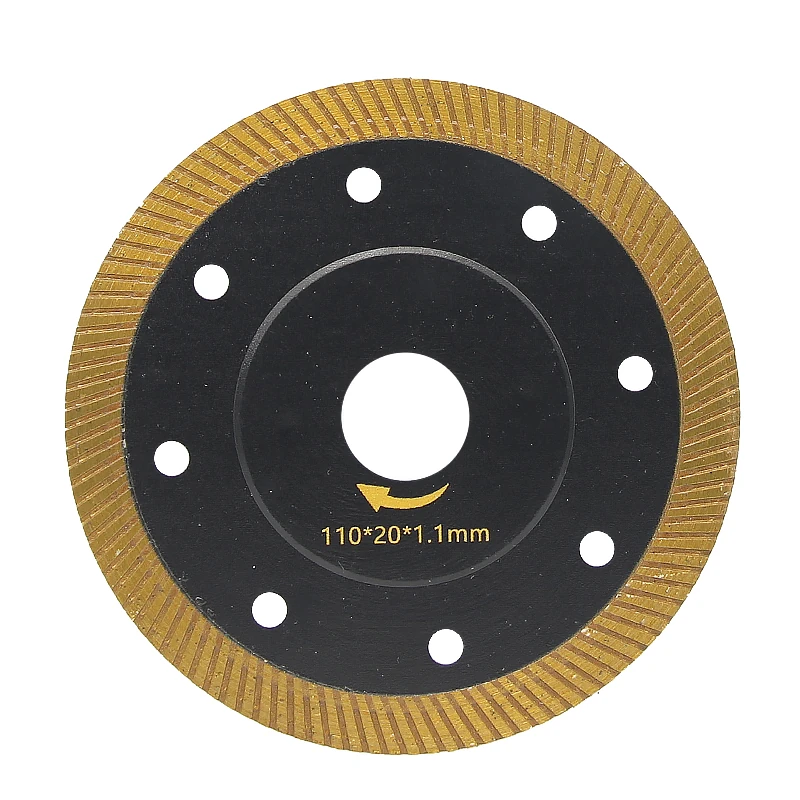
An arrow marked on the blade core indicates its standard working direction, which must be consistent with the rotation direction of the saw spindle. On a handheld circular saw, teeth cut upward into materials, while on a table saw, the blade rises toward the table surface. Notably, the arrow only represents the rotation direction, not the front or back of the blade. A reversed blade delivers poor cutting performance, accelerates segment wear, and causes severe vibration and material chipping.
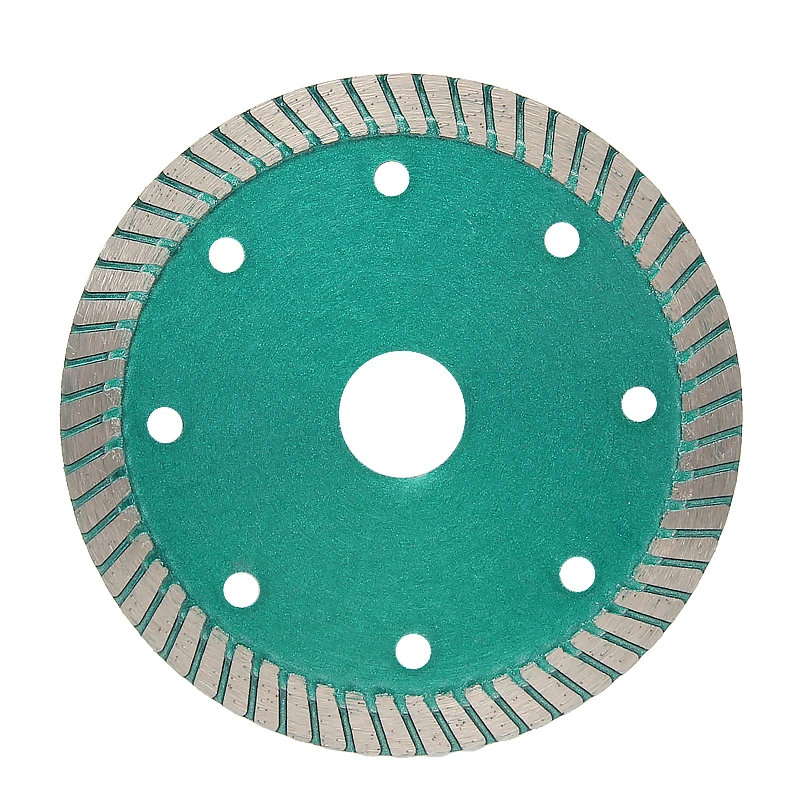
4. Standard Steps to Fit a Diamond Blade on Circular Saw
4.1 Remove the Old Circular Saw Blade
Cut off the power supply and lock the spindle firmly. Use a special wrench to loosen the locking nut, then remove the outer flange, old blade and inner washer. Clean dust, mortar and rust from the spindle and flanges completely, as dirty contact surfaces will cause the blade’s radial runout. Replace any bent or worn flanges in a timely manner.
4.2 Fit the New Diamond Blade
Slide the inner flange washer onto the spindle first, then install the diamond blade. Confirm that the arrow on the blade core aligns with the spindle rotation direction. Mount the outer flange and keep the flanges flat against both sides of the blade. Avoid shifting washers or single-sided clamping, and ensure the blade bore fits the spindle smoothly without jamming.
4.3 Tighten the Blade to Stop Loosening
Screw the locking nut on manually at first, then lock the spindle and tighten the nut to the standard torque with a wrench. Do not over-tighten the nut to prevent thread stripping. Insufficient torque will cause the blade to shift during cutting. The flanges must fully clamp the blade surface, as partial clamping will trigger blade wobble or detachment at high speed.
4.4 Test the Machine and Safety Check Before Use
After assembly, rotate the blade manually to ensure it spins freely without obvious wobble. Install the blade guard and verify its flexible movement. Clear the workspace and keep irrelevant personnel away. Run the saw at no load for a short test, and observe for abnormal shaking or strange noises. Stop the machine immediately for inspection if blade vibration occurs.
5. Notes for Blade Replacement in Special Cases
Different saw models and cutting materials require targeted installation and replacement methods. When replacing blades for Hitachi circular saws, adopt original flanges and spindle locks, and avoid non-standard washers that affect equipment concentricity. Wet diamond blades for stone and tile cutting require continuous water supply; dry cutting is prohibited, as high temperature will burn and damage diamond segments.
Small diamond blades need sufficient flange contact area, because overly narrow clamping will bend the blade under centrifugal force. Do not install blades on saws with damaged spindle threads or bent flanges. Unplug the equipment and stop cutting immediately if the blade loosens during operation, and never adjust the blade while the machine is running. For frequent daily use, regularly check flange wear and spindle runout to ensure operational safety.
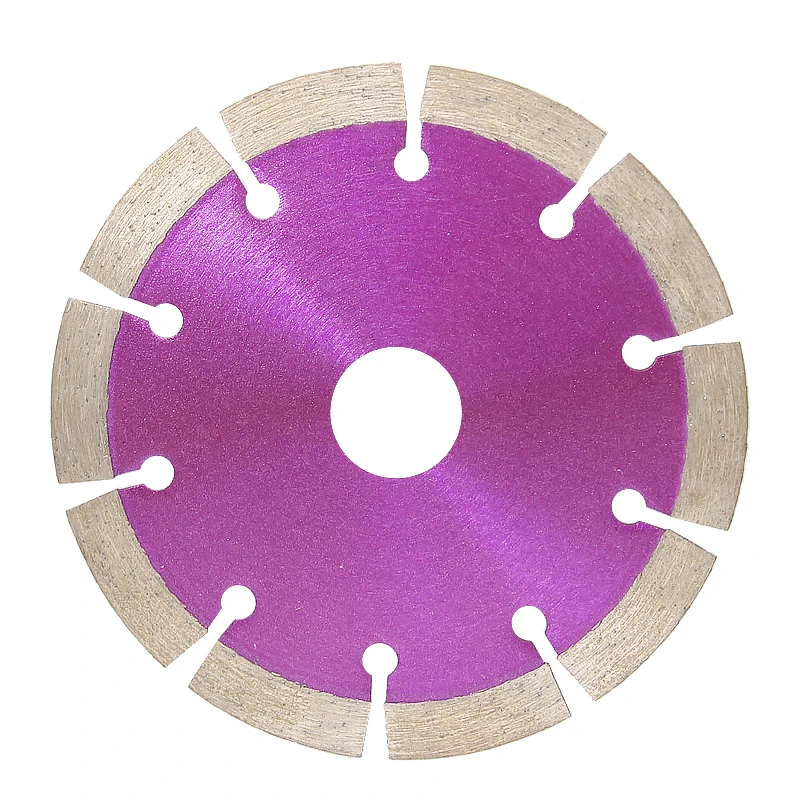
6. Useful Tips for Correct Use of Diamond Circular Saw Blades
Diamond blades cut materials through the grinding effect of diamond grains, instead of the tearing principle of traditional woodworking blades. Apply steady and light feed pressure during operation, and avoid forced pushing, which may break diamond segments, bend the blade core and cause motor overload.
Equip wet diamond blades with water cooling when cutting stone, concrete or tile to prevent overheating damage to diamond layers. Dry cutting diamond blades require intermittent short cuts for heat dissipation and cannot work continuously. Start the saw at full speed before contacting the workpiece, and pull the blade completely out of the cut before stopping the machine. Avoid starting or stopping the saw inside the cut, which will generate stress cracks, cause segment loss and increase kickback risks.
Diamond blades are only applicable to hard brittle materials; cutting wood or plastic is forbidden, as soft materials will block blade gaps, accumulate heat and quickly dull diamond grains. After use, wait for the blade to cool down completely, clean residual mortar and dust, and inspect for hidden cracks or loose segments. Store blades flat without heavy pressure to prevent permanent deformation.
7. Core Advantages of Using Diamond Blade on Circular Saws
Diamond blades adopt high-hardness diamond grains as the cutting core, delivering far better performance than carbide blades when processing hard brittle materials such as tile, stone and concrete.
7.1 Great Wear Resistance and Longer Service Life
Diamond ranks among the hardest natural materials. Diamond blades feature excellent wear resistance when cutting concrete, brick and ceramic materials. They maintain long-term sharpness compared with steel and alloy blades, effectively reducing the frequency of blade replacement and lowering overall use costs.
7.2 Stable Cutting and Better Finish
The blade core maintains high rigidity and is not prone to bending. It keeps excellent balance at high rotating speed, effectively reducing tile chipping and uneven cutting problems. The processed surface is smoother, minimizing subsequent polishing and finishing work.
7.3 Wide Compatibility
Ordinary circular saw blades are only suitable for wood cutting, while diamond blades support multi-scene processing of tiles, marble, granite, concrete floors and bricks. A single blade can meet most construction and home renovation cutting needs, reducing frequent blade replacement operations.
7.4 Heat Resistance and Safer Operation
Diamond materials possess outstanding high-temperature resistance, which prevents blade softening, deformation and fracture. It greatly reduces the probability of blade jams and kickback during handheld circular saw operation, improving overall construction safety.
7.5 Lower Load and Protect the Saw Motor
Diamond blades complete cutting through physical grinding, requiring less thrust during operation and avoiding motor overload. Reduced operating load lowers equipment heat generation and failure rate, effectively extending the service life of circular saws.
8. FAQ
Q: Can I fit any diamond blade on circular saw?
A: No. The blade must match the spindle hole, outer diameter and rated RPM. Blades designed for specific materials cannot be replaced randomly. Mismatched blades will lose balance and may burst during operation.
Q: Do I need water when cutting with a diamond blade?
A: Wet diamond blades need water cooling to protect diamond segments from thermal damage. Dry diamond blades can work without water but require intermittent short cuts for heat dissipation. Continuous dry cutting is not allowed.
Q: How do I quickly check if my diamond blade is installed correctly?
A: Unplug the saw first. Spin the blade manually to ensure free movement with negligible radial wobble. Confirm the blade arrow aligns with spindle rotation, flanges are tightly fastened, and no abnormal shaking or noise occurs during no-load testing.
Q: What is the correct direction of teeth on a handheld circular saw, and why?
A: Teeth cut upward through the workpiece. The cutting force presses the saw tightly against the material, effectively reducing kickback risks.
Q: How do I tell if the blade is backwards? What happens if it is reversed?
A: The blade is installed backwards when the core arrow fails to match the spindle rotation direction. Reversed installation increases cutting resistance, accelerates diamond segment wear, and results in chipped, rough cut surfaces.
Q: Does a diamond blade have strict rotation requirements? Where is the arrow?
A: Yes. The rotation arrow is printed on the blade core. Diamond segments only function effectively on one side of the blade, so rotation direction is mandatory.
Q: Will a reversed diamond blade damage the circular saw?
A: Yes. It increases operating load and causes motor overheating, bringing extra pressure to spindle bearings and accelerating equipment wear.
Q: Does blade rotation affect the quality of cut surfaces?
A: Yes. Correct rotation achieves uniform and smooth grinding. Reversed rotation will scrape materials, leading to rough cuts and edge chipping.
Q: What is the difference in blade rotation between a table saw and a handheld circular saw?
A: Both blades cut upward into workpieces, with only a difference in viewing angles. Always install the blade strictly according to the marked arrow on the blade.