-
Blake.Chu sales consultant
-
Email: 113217160@qq.com
-
Phone/WeChat +86 19129108136
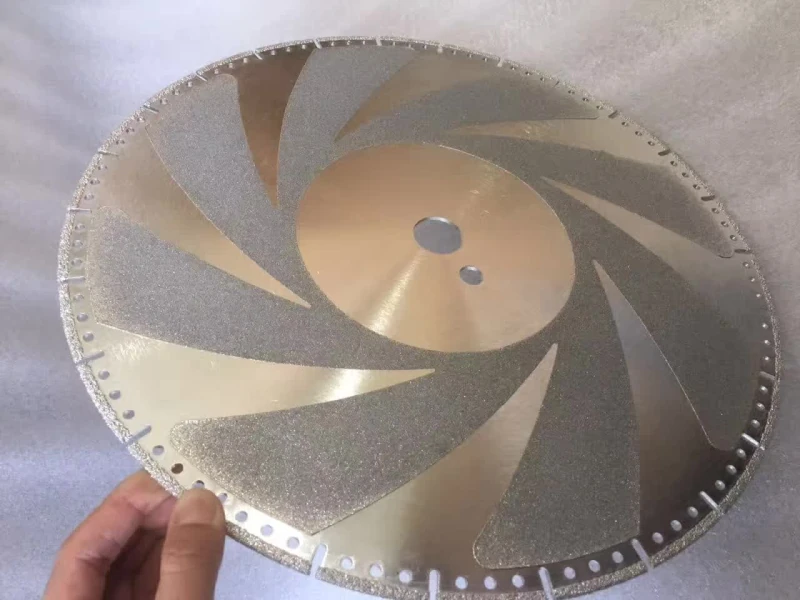
How are diamond saw blades made
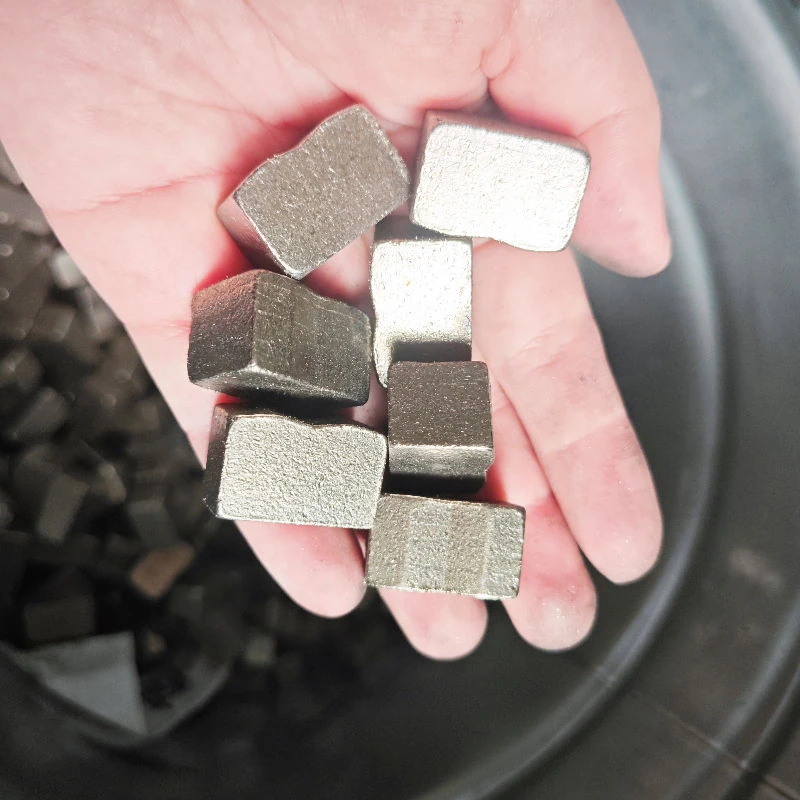
We put forward a new process to make diamond circular saw‑blade segments for diamond saw blades. This method mixes low‑temperature electroplating technology with powder‑metallurgy hot‑pressing. First, we use electroplating to make diamond composite base blocks. These blocks work as the frame and grinding material for saw‑blade segments. Next, we bond these blocks together with low‑melting‑point metal powder and finish the diamond saw‑blade segments. Test results show that segments made by this new process stay sharp and wear‑resistant. They also bring good value for money.
Introduction
When workers turn raw marble and granite into decorative stone slabs, sawing is a very key step. Sawing takes up more than 50 % of the total cost for stone processing. So we need to cut production costs and improve the performance and service life of diamond saw blades and their matching diamond saw‑blade segments. This is one useful way to lower overall stone‑processing costs.
At home and abroad, factories mostly use powder‑metallurgy pressing to produce diamond saw‑blade segments for diamond saw blades. However, this common method has several clear downsides:
- It requires high‑grade diamond raw materials.
- Workers must strictly control the metal‑matrix formula and production steps. Otherwise, diamond grains will easily fall off.
- High heat during production harms diamond grains. This makes the saw blade cut less well.
Traditional electroplating methods for diamond saw blades include the one‑step forming method. Workers grow diamond segments directly on the saw‑blade base through electroplating. This method takes long production time, needs complex steps and special moulds.
Another choice is the two‑step forming method. Workers first make separate segments by electroplating, then fix these segments onto the base with electroplating. Compared with the one‑step method, it spends less time, uses simpler steps and needs no moulds. It costs less and quality is easier to control.
Still, the stone industry keeps raising standards for cutting tools. Tools need better precision, smooth surfaces, flat shapes and good forming effects. Ordinary electroplating methods still have many limits. Limited electric‑current density slows down production speed, so factories cannot make large batches easily.
People have tried many ways to improve diamond saw blades and diamond saw‑blade performance in recent years. These ways include metal‑coating diamond surfaces, making diamond pellets, adjusting sawing settings and matching blades with different stone materials. Even so, diamond grains inside segments still cannot be fully used.
Based on our tests, we introduce this new manufacturing process. We make diamond composite base blocks by electroplating, then bond them into complete saw‑blade segments with low‑melting‑point powder‑metallurgy materials. By combining low‑temperature electroplating and powder‑metallurgy hot‑pressing, this process raises production efficiency and improves blade performance. It greatly cuts tool‑making costs and is worth wide‑range application.
Manufacturing Process
Make diamond composite base blocks by electroplating
We follow this workflow for low‑temperature electroplating: pre‑treatment → strike plating → plain plating → diamond setting plating → build‑up plating → water washing → drying.
- Pre‑treatment
Industrial diamond carries impurities. We must clean them away. If impurities remain, diamond will not stick firmly to the metal matrix inside composite base blocks.
Cleaning steps: boil diamond inside NaOH solution → wash with water → heat in dilute nitric acid → wash with water → soak inside plating liquid. Strong alkali and strong acid remove organic dirt and metal impurities on diamond surfaces. Soaking in plating liquid helps diamond mix well with plating liquid and strengthens bonding force between diamond and metal matrix.
Before metal deposition, clean the electroplating base to remove oil and wash it fully. This avoids un‑coated spots and keeps plating liquid clean.
- Composite deposition
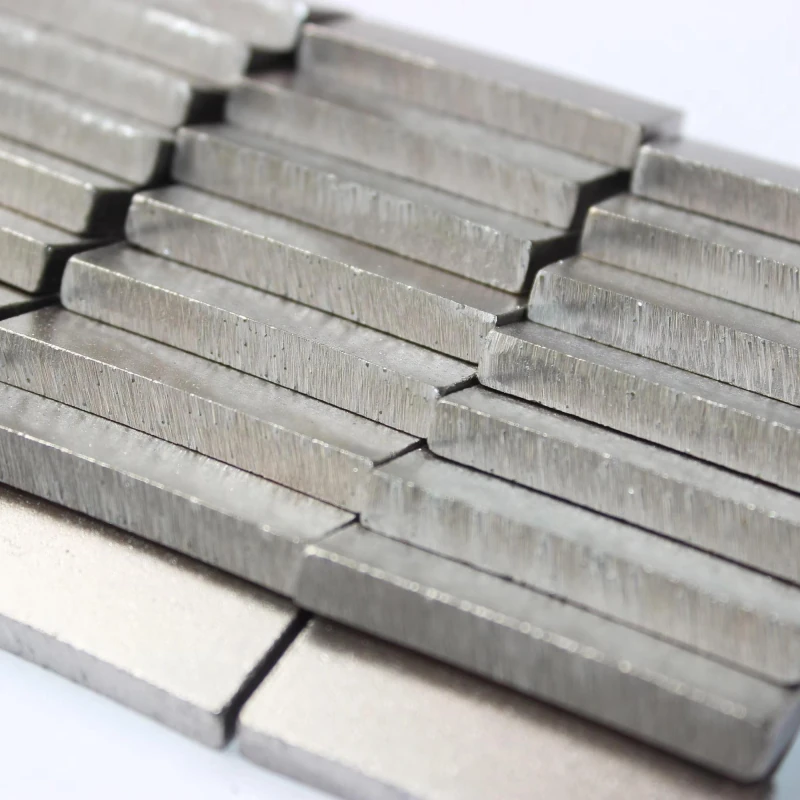
We take 1 mm‑thick copper plates as the base material. Remove oil and dirt, then clamp copper plates tightly with fixtures. Fixtures divide one copper plate into many small pieces of 24 mm × 12 mm (you may change this size for real needs). After composite electroplating covers each small piece with diamond and metal, you can peel off one diamond composite base block from every small piece.
During electroplating, set the copper plate as the cathode. Turn on power and run pre‑plating first. Spread diamond grains evenly over the copper plate (this step is diamond setting). Use low‑current density for some time, then stop adding diamond. After that, increase current density for build‑up plating. When most or all diamond grains get covered by deposited metal, take out the fixture. Wash parts with water and peel finished composite base blocks off copper plates. Dry these base blocks and get them ready for making segments.
Each composite base block measures 24 mm × 12 mm. Its thickness mainly depends on deposition time and current density during build‑up plating. Usually its thickness is close to the size of diamond grains you use. Figure 2 shows the surface look of electroplated diamond composite base blocks.
Make tool segments with powder‑metallurgy hot‑pressing
We use low‑melting‑point powder‑metallurgy hot‑pressing to produce parts for diamond saw blades. We stack several electroplated diamond composite base blocks and bond them together to build layered diamond saw‑blade segments. Bonding powder mainly contains copper plus other cheap metals. Change metal types and mixing ratios for different stone materials you cut.
We use traditional mould sizes (24 mm × 12 mm × 9 mm) for segment production. You may adjust stacking layers of composite base blocks for different stone types. Generally speaking, use fewer layers for stones with large crystal grains.
Low‑melting‑point metal powder works as bonding material. We can use lower sintering temperature. This reduces heat damage done to diamond grains.
You may also choose cold pressing or vacuum sintering to produce diamond saw‑blade segments.
Key Technology Points
Quality of electroplated diamond composite base blocks
Diamond composite base blocks replace ordinary diamond grinding layers. Diamond grains on these blocks do most cutting work. So base‑block quality directly decides segment quality. Block quality depends on diamond raw‑material quality and careful control over electroplating steps.
We need fine‑grained metal matrix from electroplating. The matrix must hold diamond grains tightly. For this goal, pick proper alloy materials, set correct electroplating parameters and follow right diamond‑setting operations.
Bonding between composite base blocks
Bonding quality between composite base blocks controls how strongly metal‑powder layers connect with grinding layers. This connection force greatly influences cutting performance.
If electroplating buries diamond grains deep inside the base block, joints form between electroplated matrix metal and powder‑metallurgy metal. In this situation, bonding force becomes strong, and tools can take heavy saw‑cutting loads.
Conclusions
- We mainly use low‑melting‑point metal powder as bonding material and apply lower hot‑press temperature. This lowers heat damage to diamond and stops diamond oxidation. Lower sintering temperature also makes production easier.
- Electroplating controls how tightly the matrix holds diamond grains, and we can easily get reliable holding force.
- Electroplated diamond tools support high diamond concentration. Saw blades stay sharp and complete cutting work faster.
- We can use Grade Ⅱ and Grade Ⅲ lower‑quality diamond to make composite base blocks. Diamond takes a large share of total segment‑making cost. So this new process greatly cuts production costs for diamond saw blades and diamond circular saw‑blade segments.
Summary
This new manufacturing process combines low‑temperature electroplating and powder‑metallurgy hot‑pressing to produce diamond circular saw‑blade segments. It reduces diamond thermal damage, creates firm holding force for diamond grains and allows higher diamond concentration for sharp cutting performance. Besides, it can adopt low‑grade diamond materials to greatly cut production costs, and it has good popularization value for the stone‑processing industry.