-
Blake.Chu sales consultant
-
Email: 113217160@qq.com
-
Phone/WeChat +86 19129108136

Diamond Saw Blade: HS Code & Import Guide
HS codes are only for commodity classification reference. The final customs declaration follows the ruling of local customs or pre-classification decisions.
1. What is an HS Customs Code
The full name of HS is the Harmonized Commodity Description and Coding System. Developed by the World Customs Organization (WCO), it serves as a unified global product classification system for international trade. The international standard adopts a 6-digit basic code, which is universally used by all WCO member countries. On the basis of the unified 6-digit framework, each country can expand exclusive sub-codes. Specifically, China uses 10-digit codes, the United States adopts 10-digit HTS codes, and GCC countries implement 12-digit codes.
The hierarchical structure of HS codes includes chapter, heading, and subheading. These codes are widely applied to calculate tariff rates, verify import and export supervision rules, compile trade statistics, and clear cross-border shipments through customs. To complete accurate commodity classification, inspectors need to comprehensively judge product material, usage, shape, and workpiece instead of relying solely on product names. Search results from third-party platforms are merely preliminary references and cannot be used as legal bases for formal customs declaration.
2. Diamond Saw Blade Standard Parameter & Application Scenario
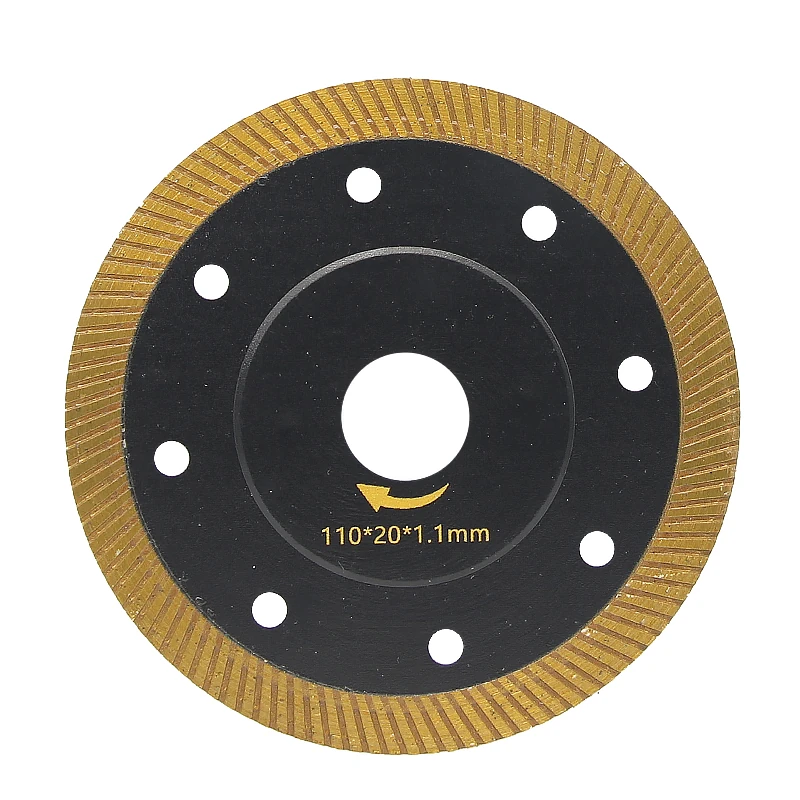
2.1 Diamond Saw Blade Size Parameter Table
| Parameter Item | Standard Specifications | Remarks |
|---|---|---|
| Blade Diameter | 105mm, 110mm, 115mm, 125mm, 180mm, 230mm, 350mm, 400mm | Covers mainstream civilian and industrial cutting models |
| Arbor Bore Size | 16mm, 20mm, 22.23mm, 25.4mm | Compatible with most standard cutting power tools |
| Segment Height | 5mm – 12mm | Determines blade wear resistance and service life |
| Maximum RPM | 13200 RPM (small blades), 6500 RPM (large blades) | Complies with international cutting safety standards |
| Base Material | 65Mn Steel | High hardness and structural stability |
| Diamond Segment Type | Sintered, Laser-welded, Electroplated | Adapt to different cutting materials and working conditions |
2.2 Diamond Saw Blade Application Scenario Table
| Blade Type | Applicable Materials | Usage Scenarios |
|---|---|---|
| Continuous Tooth Diamond Blade | Ceramic, Tile, Fiber Cement Board | Home decoration, fine tile cutting, no edge chipping |
| Segmented Diamond Blade | Granite, Marble, Natural Stone | Stone processing factory, outdoor stone cutting |
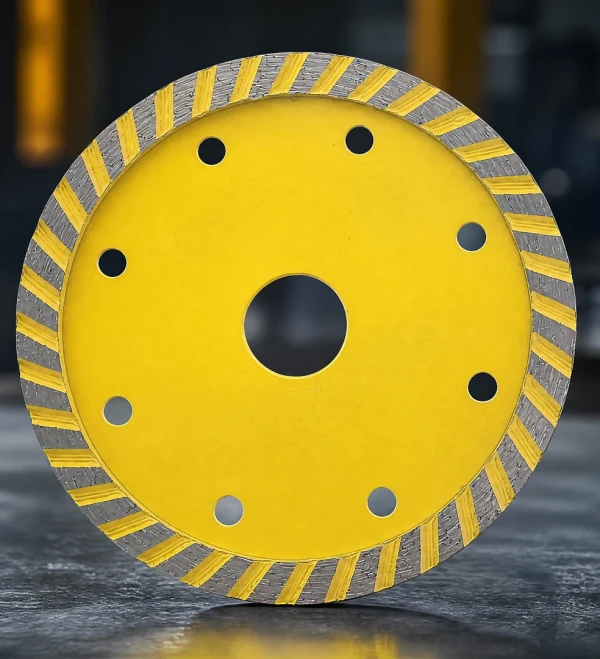
| Turbo Rim Diamond Blade | Concrete, Reinforced Concrete | Construction renovation, wall and floor grooving |
| Ultra-thin Wave Blade | Micro-ceramic, Soft Stone | High-precision handicraft processing, thin material cutting |
3. Detailed Introduction to HS Codes for Diamond Saw Blades
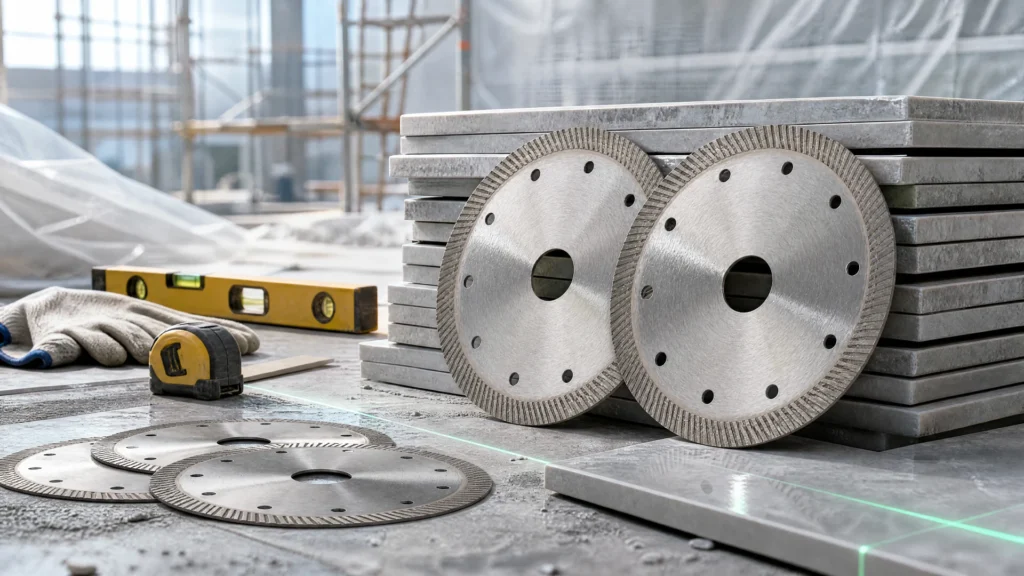
Diamond saw blades fall under Chapter 82 of HS for base metal tools, classified under heading 8202 (saws and saw blades). The core Chinese 10-digit HS code is 8202310000, which applies to circular saw blades equipped with sintered or brazed diamond tips and metal substrates. These professional blades are specially designed for cutting stone, concrete, fiber cement and other high-hardness materials. By contrast, ordinary circular saw blades without diamond or cemented carbide cutting parts adopt the code 8202399000.
Accurate classification depends on multiple core factors, including PCD tip structure, substrate material, processing workpiece and production technology. Product shape serves as the decisive classification standard, so users must distinguish diamond circular saw blades from straight saw blades (8202.91) and band saw blades (8202.20) to avoid misclassification. While the first 6 digits of HS codes remain consistent globally, exporters need to independently verify local diamond circular saw blade HTS and GCC 12-digit codes for different destination countries. In addition, separately declared flanges and fasteners cannot be classified under this heading.
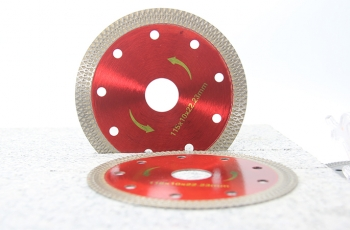
4. Basic Introduction to HS Codes for Circular Saw Blades
Circular saw blades belong to Chapter 82 base metal tools, under HS heading 8202 (saws and saw blades). The international unified 6-digit HS codes for circular saw blade products are 8202.31 and 8202.39, with refined 10-digit subcodes exclusively used in China. Specifically, 8202310000 covers circular saw blades fitted with cemented carbide or diamond cutting components, while 8202399000 applies to all other ordinary circular saw blades.
The key classification determinants cover saw blade shape, cutting edge material, processing workpiece and processing methods. As disc-shaped mechanical cutting tools, circular saw blades must be strictly differentiated from straight saw blades and band saw blades. If flanges are shipped together with circular saw blades as a complete set, they can be declared under the same HS code; if washers, lock nuts and other accessories are shipped separately, they need to be classified as independent base metal parts. For cross-border export business, only the first 6 digits of HS codes are universal worldwide, so it is essential to check the destination country’s HTS or GCC 12-digit codes in advance.
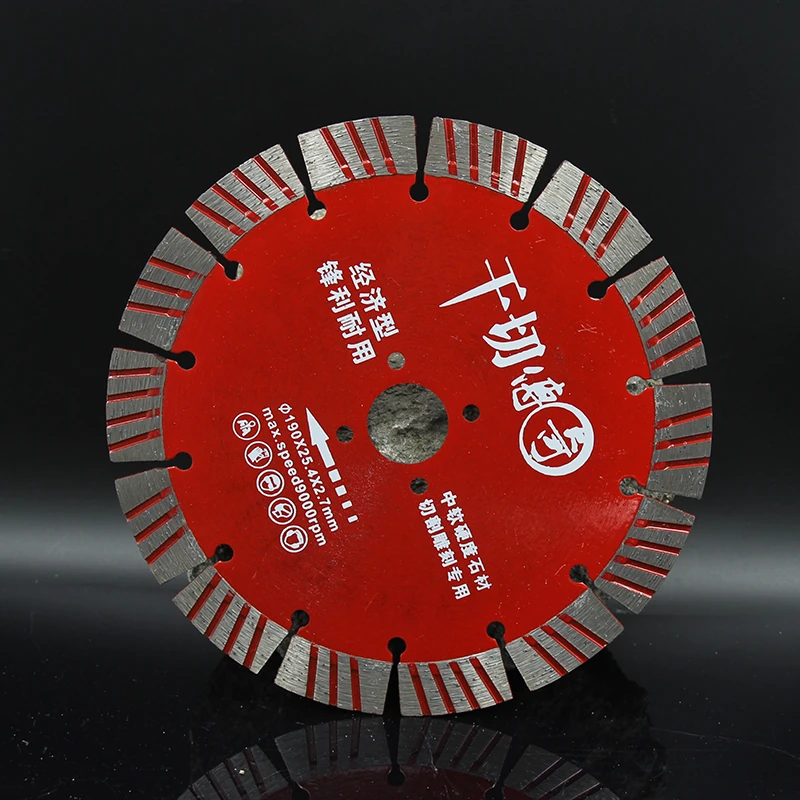
5. Summary of Mainstream HS Codes for Circular Saw Blades
All circular saw blades are categorized under HS Chapter 82 base metal tools and heading 8202, with the universal international 6-digit codes 8202.31 and 8202.39. The two most commonly used 10-digit codes in China cover mainstream products comprehensively. The code 8202310000 is applicable to circular saw blades with diamond or cemented carbide cutting edges, including professional PCD fiber cement saw blades. The code 8202399000 is used for ordinary metal circular saw blades without high-hardness cutting edges.
Commodity classification is primarily determined by cutting edge material, product shape and processing workpiece. It is crucial to avoid confusing the codes of straight saw blades and band saw blades. Complete sets of flanges attached to saw blades can follow the same classification standard, while separately shipped fasteners and gaskets require independent classification. Since only the first 6 digits of HS codes are globally unified, enterprises must check US HTS and GCC 12-digit codes separately for overseas export declarations.
6. Step-by-step Guide for Standard Classification of Circular Saw Blades
Step 1: Collect complete key product information, including disc shape, substrate material, cutting edge material (cemented carbide / diamond / PCD), processing workpiece and actual working conditions.
Step 2: Match the product with HS heading 8202, and select the corresponding international 6-digit HS code: 8202.31 or 8202.39.
Step 3: Exclude similar interfering products, and strictly distinguish band saw blades (8202.20) and straight saw blades (8202.91) to prevent misclassification.
Step 4: Confirm the product shipment status. If flanges are delivered together with the saw blade, use the unified HS code; if fasteners are shipped separately, declare them as independent base metal parts.
Step 5: Complete destination code verification before export. Check the local HTS or GCC 12-digit codes according to the target market. For high-value and high-risk goods, apply to the customs for a pre-classification ruling to effectively reduce inspection risks.
7. Analysis of Common Classification Difficulties for Cutting / Grooving Saw Blades
Cutting and grooving circular saw blades are classified under HS Chapter 82 and heading 8202. Most classification disputes in actual customs declaration stem from incorrect judgment of product shape and cutting functions. The most common mistake is confusing grooving saw blades with milling cutters. In fact, the core distinguishing standard lies in processing principles: disc blades with tooth-shaped cutting edges that complete cutting through sawing motion are uniformly defined as circular saw blades.
In terms of code matching, grooving saw blades equipped with PCD or diamond tips apply to 8202310000, while models without high-hardness cutting edges use 8202399000. During classification, band saw blades and straight saw blades must be excluded in advance. Supporting flanges delivered together with the main blade can be declared in one set, while separate accessories need independent coding classification. For export business involving complex products, enterprises are recommended to apply for customs pre-classification rulings to avoid inspection and return risks caused by incorrect coding.
8. HS Code Description for Hacksaw Blades
Hacksaw blades belong to HS Chapter 82 base metal tools and heading 8202, with the international unified 6-digit HS code 8202.91 and the dedicated Chinese 10-digit declaration code 8202919000. This code covers all non-mechanical straight saw blades for metal cutting, including conventional hand hacksaw blades and bimetallic straight hacksaw blades. Product overall shape is the core basis for hacksaw blade classification, and all qualified straight blades fall under this heading.
There are clear classification boundaries for similar products. Ring-shaped bimetallic band saw blades apply to the independent code 8202201000, while circular saw blades adopt 8202.31 / .39 series codes, and cross-classification is prohibited. In formal customs declaration, enterprises must clearly fill in product material and processing workpiece information. It is worth noting that only the first 6 digits of HS codes are universally applicable globally, and targeted verification of US HTS and GCC 12-digit codes is required for overseas exports.
9. Steps to Accurately Look Up HS Codes for Hacksaw Blades
Step 1: Sort out complete product specifications, including product shape, substrate material (including bimetallic material), usage mode, processing workpiece and detailed parameter information.
Step 2: Retrieve HS heading 8202 through the China International Trade Single Window, confirm the international 6-digit standard code 8202.91 and the exclusive Chinese 10-digit declaration code 8202919000.
Step 3: Eliminate interference from similar products, and clearly distinguish band saw blades and circular saw blades to avoid classification errors.
Step 4: Check official declaration element requirements, and supplement accurate and standardized descriptions of product material and usage scenarios.
Step 5: Complete overseas code inquiry before export, confirm the destination country’s HTS or GCC 12-digit codes. For high-value or structurally complex products, apply to local customs for pre-classification rulings to eliminate document audit and on-site inspection risks.
10. 2025 HS Code Policy Updates for Hacksaw Blade Tools
In 2025, neither the core Chinese hacksaw blade code 8202919000 nor the international 6-digit code 8202.91 has undergone heading revision, code cancellation or merging adjustments. The policy updates are mainly reflected in the stricter standardization of declaration elements. Customs authorities focus on verifying product shape, bimetallic material attributes, processing workpiece and usage type, so as to fundamentally prevent misclassification between straight hacksaw blades and band saw blades (8202201000).
In terms of export supervision, US HTS systems have tightened the review of product origin and material descriptions for goods under this code. Meanwhile, GCC countries have continuously strengthened compliance supervision on 12-digit code declaration. To adapt to the new regulatory requirements, enterprises need to standardize declaration document filling. For high-value bulk orders, applying for official pre-classification rulings can effectively avoid inspection detention and classification review risks.
11. Common Mistakes and Avoidance Guide for Hacksaw Blade Classification
Most hacksaw blade classification errors in customs declaration are caused by confused product shape judgment. The first common mistake is classifying bimetallic band saw blades under the 8202.91 code; in fact, all ring-shaped band saw blades should adopt the dedicated code 8202201000. The second mistake is determining HS codes merely by product names while ignoring core classification factors such as manual/mechanical usage and product shape. The third mistake is directly applying China’s 10-digit HS code to foreign customs clearance, which does not conform to international trade norms, as destination countries require local exclusive HTS or GCC 12-digit codes.
Therefore, enterprises must clearly mark product material, processing workpiece and shape characteristics in declaration documents. For products with complex structures or high unit value, advance application for customs pre-classification rulings is essential to avoid document audit queries, on-site inspections and supplementary tax payment risks.
12. Free Official Tools to Look Up HS Codes for Hacksaw Blades
Enterprises can use multiple free official platforms to complete HS code inquiry and verification for hacksaw blades. The China International Trade Single Window supports tariff item inquiry and declaration element query. The Internet + Customs platform provides official heading notes and historical classification ruling data. The special customs classification system can verify the validity and supervision conditions of 8202919000. In addition, the 12360 customs hotline provides professional manual classification guidance.
For overseas business, official platforms such as USITC HTS and GCC Customs System can be used to verify destination HTS and 12-digit codes. During inquiry, users need to strictly distinguish straight hacksaw blades from band saw blades to prevent misclassification. It should be emphasized that online inquiry results are only preliminary references. For complex products, official pre-classification rulings must be used as the final compliance basis, and online data cannot be applied to formal customs declaration.
13. FAQ
Q1: What is the standard HS code for hacksaw blades?
A: The international 6-digit HS code is 8202.91, and China’s exclusive 10-digit declaration code is 8202919000. This code applies to non-mechanical straight saw blades for metal cutting, including hand-operated and bimetallic straight hacksaw blades. It is not applicable to ring-shaped band saw blades.
Q2: Did the HS code for hacksaw blades change in 2025?
A: In 2025, there are no heading revisions, code cancellations or merges for 8202919000 and the international 6-digit code 8202.91. The only policy adjustment is stricter official inspection on standardized declaration information, with enhanced verification of product material and shape attributes.
Q3: What products does HS code 8202.91 cover?
A: HS code 8202.91 applies to all straight saw blades for metal processing, including hand straight hacksaw blades and reciprocating straight saw blades. It explicitly excludes circular saw blades, band saw blades, chain saw blades, saw frames and all types of saw blade accessories.
Q4: How do I find the unique HS code for my product?
A: First, sort out core product information including material, shape and processing workpiece. Second, complete preliminary inquiry through the official Single Window platform. Third, distinguish similar products to avoid misclassification. Fourth, verify the exclusive code of the destination country before export. Finally, apply for customs pre-classification rulings for high-risk products to ensure declaration compliance.
Q5: Does bimetal material change the HS code classification for hacksaw blades?
A: Product material will not change the HS heading attribution, and product shape is the absolute core classification standard. Straight bimetallic hacksaw blades are classified under 8202.91, while ring-shaped bimetallic band saw blades apply to 8202.20. Enterprises need to clearly declare the bimetallic structure in declaration details.
Q6: What new US rules apply to code 8202.91 in 2025?
A: The basic US HTS code for this category remains unchanged, and 301 tariff supervision policies continue to be implemented. US Customs has strengthened the inspection of product origin, material attributes and descriptive information. Vague declaration content will easily trigger classification review. It is not allowed to use China’s domestic HS code directly for US customs clearance.
Q7: What are the Gulf countries’ standards for 12-digit HS codes for tool products?
A: GCC countries adopt a unified 12-digit HS code system. The first 6 digits follow global unified standards, the 7th to 8th digits are shared by all GCC member states, and the 9th to 12th digits are independently formulated by each country. Tool product exports to GCC regions must submit complete 12-digit codes, which need to be consistent with the product GCC certificate of conformity.
Q8: What are the official 2025 channels to look up HS codes for hacksaw blades?
A: Domestic official channels include International Trade Single Window, Internet + Customs platform and 12360 customs hotline. Overseas authoritative channels cover USITC HTS official website and GCC customs platform. All official channels provide the most accurate reference data for commodity classification.
Q9: What free tools can I use to search HS codes?
A: Reliable free official tools include the Single Window platform, Internet + Customs system and USITC HTS search system. Data from third-party platforms may be outdated and inaccurate, only suitable for preliminary simple inquiry, and cannot be used as the basis for formal customs declaration.
Q10: What is the customs code for circular saw blade accessories?
A: If flanges are shipped together with circular saw blades as a complete set, they can use the same HS code as the saw blades. Separately declared lock nuts, washers and other fasteners cannot be classified under heading 8202, and need to be independently classified as general base metal parts.